Photochromic vs interchangeable goggle lenses
A two-lens goggle covers a wider real VLT range because each lens is optimised, and a photochromic lens is the one you will actually have on your face in the right configuration. Read the published VLT range: a photochromic lens spanning category one to three is doing real work, and a narrow 20 to 45 per cent band is not.
Goggles have exactly one specification that changes what you can see, and it is visible light transmission. Everything else, including tint colour, frame shape and brand, is secondary. This comparison is about two different answers to the same problem: light conditions in skiing change constantly, and no single fixed lens is right in all of them.
The comparison in one table
| Photochromic, one lens | Interchangeable, two lenses | |
|---|---|---|
| Range covered | Whatever the lens spans, often narrower than claimed | Wider. Each lens is optimised for its end |
| Convenience | Nothing to carry, nothing to swap | Stop, remove gloves, swap, store the spare |
| Reaction to change | Thirty seconds to a couple of minutes, slower in cold | Instant, once you have stopped and swapped |
| Risk of the wrong lens | Low. It adapts whether you notice or not | Real. The spare is often in the car |
| Cost | Higher for a good one | Two-lens sets start very cheap |
| Best for | Touring, variable days, anyone who will not swap | Resort days with a car nearby, and budget buyers |
VLT, and why the dangerous mistake goes one way
Visible light transmission is the percentage of available light that reaches your eye through the lens. A 10 per cent lens is for bright sun on snow, which is one of the highest-glare environments there is. A 60 to 70 per cent lens is for a storm, dusk or night skiing.
Wearing a bright-light lens on a dark day is uncomfortable and squinty. Wearing a dark lens in flat light is a different category of problem: in flat light there is almost no shadow to define the surface, and a dark lens removes what little contrast remains, so bumps, rollers and the edge of a wind lip become invisible until you are on them. That is a safety issue rather than a comfort one, and it is the reason the single most common goggle mistake in skiing is owning only a dark lens.
The VLT chart lists the bands against the weather they belong in, and it is worth reading before buying any lens.
What a photochromic lens actually gives you
A photochromic lens contains a compound that darkens under ultraviolet light and clears again when it is removed, so the lens tracks conditions without any action from you. The good ones span from a genuine storm lens to a genuine bright-sun lens, which is a large range and a real engineering achievement.
The catch is that this varies enormously by lens, and the marketing does not distinguish. Budget photochromic lenses often shift across a narrow band, which means they are neither dark enough for high sun on spring snow nor light enough for a dark storm day. Read the published VLT range or lens category span. A lens covering categories one to three is doing serious work, and one that does not publish a range at all is probably narrow.
Reaction time is the second consideration and a smaller one. Most of the change happens within thirty seconds to a couple of minutes, and cold slows the chemistry in most lenses. That is fine for weather moving through, and less good when you drop from a sunlit ridge straight into a dark gully.
What two lenses give you
Two optimised lenses beat any single adaptive one on pure optical coverage. A dedicated 10 per cent lens is darker than any photochromic lens gets, and a dedicated 65 per cent lens is lighter and gives more contrast in a storm than any photochromic lens clears to.
Magnetic lens systems have made the swap much faster than the old frame-flexing designs, which is the main reason two-lens goggles are worth taking seriously again. It is still a swap: you stop, take gloves off, handle a lens without fingerprinting the inner surface, and stow the spare in a case somewhere it will not be crushed. In practice most people leave the spare in the car, which turns a two-lens goggle into a one-lens goggle with the wrong lens on it.
Goggle picks, both approaches

OutdoorMaster OTG Ski Goggles
- Fit:
- Over the glasses
- Lens:
- Single, UV400
- Frame:
- Flexible TPU
Thirty dollars, fits over glasses, and blocks UV. The gap between this and a two hundred dollar goggle is optical clarity and fog resistance, not eye protection, and skiing without any goggle is the only genuinely bad option.
Best for: A first goggle, a spare in the bag, and glasses wearers on a budget.
What it costs you: A single lens means one light condition. It will fog on a hike and it will be useless in flat light if you picked a dark tint.

Snowalva Ski Goggles with Two Magnetic Lenses
- Lenses:
- Two, magnetic swap
- Protection:
- UV400
- Fit:
- OTG
Two lenses at this price solves the actual problem, which is that no single tint works in both sun and storm. A dark lens in flat light hides the terrain you are about to ski into.
Best for: Anyone who skis in mixed weather and does not want to own two goggles.
What it costs you: Optical quality and anti-fog coatings are where the budget goes. Expect to manage fogging deliberately.

KAPVOE Photochromic OTG Ski Goggles
- Lens:
- Photochromic
- Fit:
- OTG, magnetic
- Protection:
- UV400
A photochromic lens darkens and clears with the light, which is the closest thing to a one-lens answer for a skier who does not want to swap lenses on a chairlift with cold hands.
Best for: Variable days, and touring where the light changes across a climb.
What it costs you: Photochromic lenses have a range, not infinite range, and they react slowly in the cold. A dedicated storm lens still sees better in a whiteout.

Oakley Flight Deck XM Snow Goggles
- Lens:
- Prizm, rimless
- Fit:
- Medium, XM
- Field of view:
- Very wide
The rimless design puts the lens closer to a helmet visor than a frame, which is why the peripheral view is noticeably wider. On steep terrain, seeing what is beside you matters as much as seeing what is ahead.
Best for: A skier who has outgrown a budget goggle and wants clarity and field of view.
What it costs you: One lens in the box at this price. Swapping lenses on a rimless goggle is fiddlier than on a magnetic one.

Smith 4D Mag XL Snow Goggles, ChromaPop
- Lens:
- ChromaPop, curved down
- Swap:
- Magnetic, two lenses
- Fit:
- Extra large
The lens curves downward beyond the frame line, so you can see your own feet without dropping your chin. That sounds cosmetic until you are picking a line through moguls or looking at your bindings on a steep skin track.
Best for: Advanced resort skiing, and anyone whose face suits a large frame.
What it costs you: A very large goggle does not suit a small face, and a bad seal on the nose fogs regardless of price.

Julbo Cyrius X REACTIV Goggles
- Lens:
- REACTIV photochromic, category 1 to 3
- Venting:
- High output
- Use:
- Touring and alpinism
Julbo builds photochromic lenses that actually span from a storm to a glacier, and the venting is designed around a person working hard uphill rather than sitting on a lift. For touring that combination is worth more than optical bragging rights.
Best for: Backcountry touring, where you climb in flat light and descend in sun.
What it costs you: Expensive, and a photochromic lens is still slower to react in deep cold than a lens swap is.
Specifications are the manufacturer's published figures, not measurements we took. Sizes, prices and stock change constantly, so confirm on the retailer page before buying. We earn commissions from Backcountry and from qualifying Amazon purchases, and every link on this page is one or the other. Where a Backcountry button reads "shop the category" it opens a search for that category rather than that exact model, so it finds comparable gear alongside it.
If you only buy one lens
Buy something in the 30 to 45 per cent VLT band. It is the compromise that is acceptable in most conditions and genuinely wrong in none of them: slightly dark on a true storm day, slightly bright on a high spring afternoon, and perfectly usable in both.
Avoid buying a very dark lens as your only lens, however good it looks and however much you ski in sun, for the flat-light reason above. And if you wear prescription glasses, buy an OTG frame, which is shaped with channels for the arms, or accept that a normal goggle will press the arms into your temples all day.
Fog, which is a different problem
Most fogging blamed on a lens is caused by airflow rather than by the lens. The common causes, in order: a goggle jammed up against a helmet brim so the top vents are blocked, a face covering or balaclava directing breath upwards into the goggle, putting a wet goggle back on after carrying it on your forehead in falling snow, and wiping the inner anti-fog coating, which permanently damages it.
None of those is fixed by buying a different goggle. Never wipe the inside of a lens with anything but the supplied bag, and never carry goggles on your helmet brim in falling snow.
Goggles and helmets fit together, or they do not
The single check worth doing before buying either is putting both on at once. There should be no gap between the top of the goggle frame and the helmet brim. A gap is a cold stripe across your forehead all day and it is a sign the two shapes do not match. Same-brand pairings are designed around each other, but plenty of cross-brand combinations fit fine.
Helmets to pair them with

OutdoorMaster ELK MIPS Ski Helmet
- Rotational:
- MIPS
- Certification:
- ASTM F2040 and CE EN1077
- Fit:
- Dial adjust
A certified helmet with a rotational-impact liner for under seventy dollars. There is no version of this decision where saving thirty dollars by skipping MIPS is the right call.
Best for: A first helmet, a spare, and kitting out a family.
What it costs you: Heavier and warmer than a premium shell, with cruder venting. You will notice on a spring afternoon.
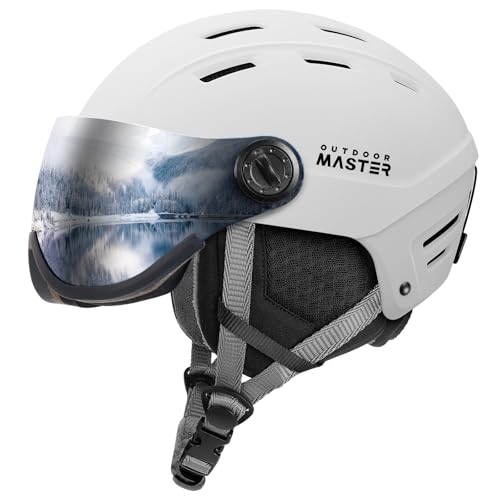
OutdoorMaster Ski Helmet with Detachable Visor
- Visor:
- Detachable
- Certification:
- ASTM F2040
- Use:
- Glasses wearers
A visor sits far enough off the face that prescription glasses fit under it without fogging against a goggle foam, which is the single most common complaint from skiers who wear glasses.
Best for: Glasses wearers and anyone who cannot get a goggle to seal on their face.
What it costs you: A visor is more exposed to scratches than a goggle lens and cannot be swapped as cheaply.

Giro Neo MIPS Snow Helmet
- Rotational:
- MIPS
- Construction:
- In-mould
- Fit:
- In Form dial
An in-mould shell from a helmet company, which buys real weight savings and better venting than an ABS hardshell at the same price. Fit consistency across sizes is where the established brands earn the money.
Best for: The default recommendation for most resort skiers.
What it costs you: In-mould shells take dings more visibly than hardshells. Cosmetic, mostly.
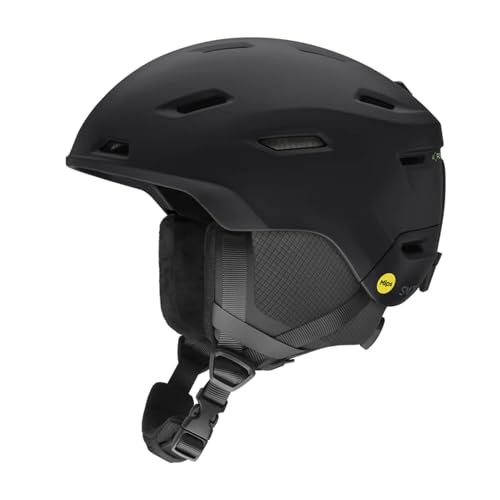
Smith Descend MIPS Helmet, matte black, large
- Rotational:
- MIPS
- Goggle:
- Smith integration
- Fit:
- Dial adjust
The goggle integration is the real argument: a helmet and goggle from the same maker leaves no gap on the forehead, and a gap there is the reason a lot of people ski with a cold stripe across their brow all day.
Best for: Anyone already in Smith goggles, and cold-weather resort skiing.
What it costs you: Priced well above the budget tier for a gain most skiers only notice in comfort, not in safety.

POC Fornix MIPS Ski Helmet
- Rotational:
- MIPS
- Shell:
- Aramid bridges, PC and EPS
- Fit:
- 360 degree adjust
Aramid bridges inside the liner spread load rather than letting the EPS crush locally. POC publishes more about its construction than almost anyone, which is the only honest basis for choosing a premium helmet.
Best for: A skier who wants the most protective construction available in a resort helmet.
What it costs you: Expensive, and every helmet on this page meets the same certification.

POC Obex BC MIPS Ski Helmet with RECCO
- Certification:
- Ski and climbing standards
- RECCO:
- Reflector built in
- Medical ID:
- NFC tag
Certified to both ski and mountaineering standards, so one helmet covers a bootpack with rockfall overhead and the ski down. The built-in RECCO reflector is a passive locator for organised rescue, and it is not a substitute for a beacon.
Best for: Touring and ski mountaineering, where a helmet has to do two jobs.
What it costs you: Do not read RECCO as avalanche safety. It only works with a rescue-service detector, which arrives long after a companion rescue would have mattered.
Specifications are the manufacturer's published figures, not measurements we took. Sizes, prices and stock change constantly, so confirm on the retailer page before buying. We earn commissions from Backcountry and from qualifying Amazon purchases, and every link on this page is one or the other. Where a Backcountry button reads "shop the category" it opens a search for that category rather than that exact model, so it finds comparable gear alongside it.
The helmet roundup covers what certification does and does not tell you, and the goggle roundup covers the rest of the lens question including field of view and OTG fit.
Frequently asked questions
What is VLT and why does it matter more than the tint?
VLT is visible light transmission, the percentage of available light the lens lets through, and it is the only goggle specification that changes what you can see. A lens at 10 per cent VLT is a bright sunshine lens; one at 60 to 70 per cent is a storm and night lens. Tint colour affects contrast and how terrain definition reads, which is a genuine but secondary effect. The dangerous mistake is wearing a low VLT lens in flat light, where you lose the ability to read bumps and rollers in the snow ahead, which is a safety problem rather than a comfort one.
How wide a VLT range does a photochromic lens actually cover?
It depends enormously on the lens, which is exactly why the specification is worth reading. Budget photochromic lenses often shift across a narrow band, perhaps 20 to 45 per cent, which covers overcast to partial sun and leaves you underserved at both ends. Better ones span from a genuine storm lens to a bright glacier lens, and manufacturers publish the range in VLT percentages or in lens categories. A lens spanning category one to category three is doing real work. If the range is not published, assume it is narrow.
How fast do photochromic lenses react?
Typically within about thirty seconds to a couple of minutes for most of the change, and longer to reach the extreme. That is fast enough for weather moving through and for skiing out of trees into an open bowl, and slower than you would like when you drop from a bright ridge straight into a dark north-facing gully. Cold slows the reaction in most chemistries, which is worth knowing because deep cold is exactly when you are skiing. In practice the lag is a minor annoyance rather than a problem, and it is a smaller annoyance than swapping a lens with cold hands.
Is a two-lens goggle better value than a photochromic one?
On coverage, yes. Two lenses give you an actual bright-light lens and an actual storm lens, each optimised, and the combined range exceeds what any single photochromic lens spans. On convenience, no, and the convenience matters more than people expect: swapping a lens means stopping, taking gloves off, handling a lens without touching the inner surface, and carrying the spare in a case that has to go somewhere. Two-lens goggles are the better technical answer, and photochromic is the one that gets used correctly on more days.
What single lens should I buy if I only buy one?
Something in the 30 to 45 per cent VLT band, which is the compromise that is acceptable in most conditions and wrong in none of them. It is slightly dark on a genuine storm day and slightly bright on a high-sun spring afternoon, and it is usable in both. The choice to avoid is a very dark low-VLT lens as your only lens, because flat light and falling snow are common and a dark lens in those conditions genuinely hides terrain from you. A bright lens in sun is uncomfortable, a dark lens in flat light is a hazard.
Do goggles need to match the helmet?
They need to fit together, which is not the same as matching the brand. The requirement is no gap between the top of the goggle frame and the helmet brim, because a gap is a cold stripe across your forehead for the whole day and it means the two shapes are not compatible. Same-brand pairings are shaped for each other, which makes this easy, but plenty of cross-brand combinations fit perfectly. The other thing to check is that the goggle strap sits flat across the back of the helmet with the strap clip, rather than riding up.
How we choose: we compare published manufacturer specifications, published certification standards and verified owner reviews across retailers. We do not test equipment in person, and every figure quoted here is the manufacturer's published number unless we say otherwise. This is researched buying guidance and not professional instruction: binding release values are set by a certified technician on a calibrated jig, and avalanche terrain requires formal training and a current regional forecast that no article can replace.