How to wax and tune your own skis
Hot wax every four to six ski days: clean the base, drip wax from a moving iron set at the low end of the recommended range, spread it, let the ski cool completely, scrape tip to tail with a sharp plastic scraper, then brush. File side edges only with a guide set to 89 degrees, and leave base bevel and stone grinding to a shop.
Waxing is the highest return per dollar thing you can do to skis you already own, and most recreational skis have never had it done. If your skis feel dry, slow and grabby in soft snow, that is not what skis feel like. That is what an unwaxed base feels like.
What you need
- A waxing iron. A dedicated one with stable temperature control. A household iron has steam holes and poor regulation and it is how bases get burned.
- All-temperature wax unless you are chasing race conditions, in which case you already know.
- A sharp plastic scraper and a way to sharpen it, which is usually a file or a piece of sandpaper on a flat surface.
- A nylon brush. The step people skip.
- A side bevel file guide and a file if you are doing edges. Not optional.
- Two supports and a brake retainer. A wide rubber band around the brake arms holds them clear.
Tuning kit picks

Hertel Super HotSauce All-Temperature Ski Wax
- Type:
- All temperature
- Apply:
- Rub on or iron on
- Use:
- Ski and snowboard
One wax for every temperature, applied by rubbing it on if you have no iron. A dry base is slow, grabby and genuinely harder to ski, and this is the cheapest fix for it.
Best for: Anyone who has never waxed their skis, which is most people.
What it costs you: A rub-on wax lasts a couple of days. An ironed wax lasts weeks.

Skifavs Ski and Snowboard Wax Kit with Iron
- Includes:
- Iron, wax, scraper, brush
- Edge:
- Edge tuner included
- Use:
- Home tuning
Everything for a hot wax in one box. A shop tune runs thirty to fifty dollars, so a kit pays for itself in two tunes and then keeps paying for as long as you ski.
Best for: Anyone skiing more than about ten days a season.
What it costs you: A cheap iron has poor temperature control, and an overheated base is permanently damaged.
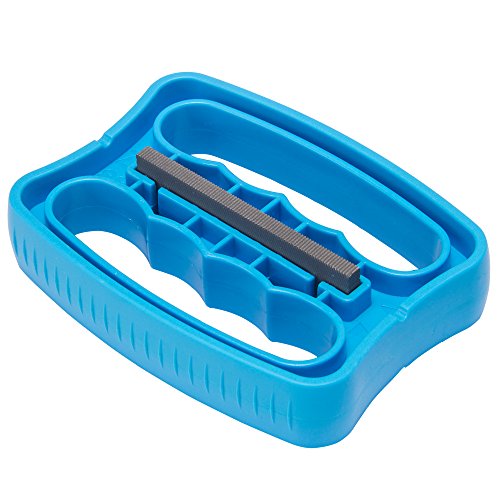
XCMAN Ski and Snowboard Side Bevel File Guide
- Angles:
- 87, 88, 89, 90 degrees
- Includes:
- File
- Use:
- Side edge tuning
A guide holds the file at a fixed angle so the edge stays consistent tip to tail. Freehand filing rounds the edge and a rounded edge does not hold on ice no matter how sharp it feels to the thumb.
Best for: Anyone tuning their own edges, especially on hardpack.
What it costs you: Easy to remove too much steel. Take less than you think, and detune tip and tail.
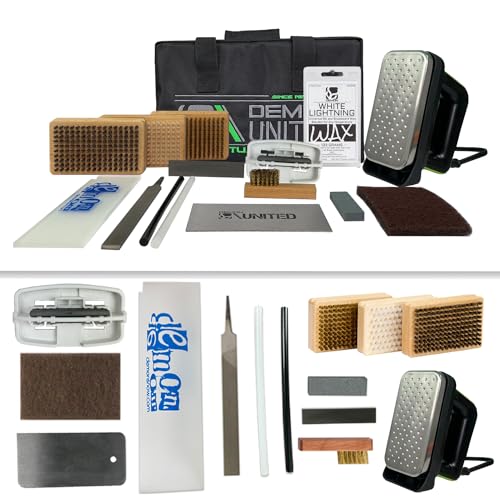
Demon Complete Ski Tune Kit with Wax and Brushes
- Includes:
- Wax, brushes, files, guides
- Scope:
- Base and edge
- Use:
- Full tune
A complete base and edge kit including the brushes, which is the part people skip and the part that actually makes a wax job work. Wax left in the structure is drag, and brushing is what removes it.
Best for: Someone tuning several pairs of skis a season.
What it costs you: More kit than a once-a-season waxer needs.

Swix T106X Chrome Second-Cut File, 200 mm
- Length:
- 200 mm
- Cut:
- Second cut, 16 TPCM
- Use:
- Edge sharpening
A chromed second-cut file leaves a finer edge than a coarse recreational file and lasts far longer. Files are consumables and a dull file tears the steel instead of cutting it.
Best for: Anyone maintaining their own edges regularly.
What it costs you: Needs a guide to be useful, and it is a file, not a whole kit.
Specifications are the manufacturer's published figures, not measurements we took. Sizes, prices and stock change constantly, so confirm on the retailer page before buying. We earn commissions from Backcountry and from qualifying Amazon purchases, and every link on this page is one or the other. Where a Backcountry button reads "shop the category" it opens a search for that category rather than that exact model, so it finds comparable gear alongside it.
Hot waxing, step by step
- Set the skis up base uppermost on two supports, with the brakes retained so they are out of the way. Ventilate the room.
- Clean the base. Base cleaner on a cloth, or a hot scrape, which is a thin coat of wax ironed on and scraped off warm to lift dirt out. Waxing over grit drives it in.
- Set the iron at the low end of the range the wax specifies. Test it: the wax should melt on contact without smoking. Smoke means too hot, every time.
- Drip a line of wax down each side of the base by holding the bar against the moving iron. Enough to cover, not a thick puddle.
- Spread it with the iron, continuously moving, tip to tail, several passes. The iron never stops. Aim for a thin even film with no dry patches.
- Let the ski cool completely to room temperature. Half an hour is typical. Scraping warm pulls wax back out of the structure.
- Scrape tip to tail with a sharp plastic scraper held at a consistent angle, in long overlapping strokes, until no more comes off. Resharpen the scraper as it dulls.
- Brush tip to tail with a nylon brush, ten to twenty passes, until the base looks matte and even. This is what makes the wax job actually work.
- Wipe with a clean cloth and check the edges are clear of wax.
Waxing without an iron
A rub-on all-temperature wax is crayoned onto the base cold and then corked or buffed in. It takes ten minutes, needs no equipment beyond the bar, and is vastly better than nothing.
It lasts about two days of skiing, because the wax sits on the surface rather than being absorbed into the porous base material. That is the whole difference: a hot wax penetrates, lasts four to six days, and protects the base from oxidising, which is what turns a base chalky and permanently slow over time.
Edges: the part where a guide is mandatory
A ski edge has two faces. The side edge runs down the flank and is what bites into hard snow. The base edge is a narrow strip on the bottom, bevelled slightly so the ski does not hook. The angle between them determines both grip and forgiveness.
Filing the side edge freehand feels productive and produces a convex edge, because your hand angle varies along the ski. A convex edge presents a curve to the snow and slides where a flat edge would bite, and every freehand tune makes it worse. A guide holds the file at one angle from tip to tail.
- Set the guide to 89 degrees for a one degree side bevel, which suits nearly every all-mountain skier. Two or three degrees is a hard-snow and race choice.
- Deburr first with a diamond stone or gummi stone. Running a file over a burr from a rock strike ruins the file.
- File tip to tail in long strokes with light pressure. Let the file cut. Clean the filings out of the teeth regularly.
- Take less than you think. Steel does not grow back and a ski has a finite number of tunes in it.
- Finish with a diamond stone to polish the edge, then a light pass with a gummi stone to take the wire edge off.
- Detune the tip and tail contact points lightly with a gummi stone so the ski does not hook into turns. Very little, and never underfoot.
Do edges after waxing rather than before, because filing throws steel filings everywhere and you do not want them in a fresh wax job.
What to leave to a shop
- Base bevel. Changing the bevel on the base edge alters how the ski releases from a turn, and getting it wrong is not recoverable at home.
- Stone grinding and base flattening. A machine job that repairs a concave or convex base and restores structure. Worth doing every season or two.
- Deep core shots. Small gouges take P-tex at home. A gouge through to the core needs proper repair before water gets in.
- Binding mounting and release settings. Never a home job. A release value must be set and then tested by a certified technician on a calibrated jig, because the torque a binding actually releases at differs from the number in the indicator window and drifts as the binding ages.
Small base repairs
For a shallow gouge that does not reach the core, clean the area, trim any raised plastic flat with a sharp blade, then drip P-tex from a lit stick or press in a P-tex ribbon with a hot iron designed for it. Let it cool completely, then scrape flush with a sharp scraper or a surform, then wax as normal.
The most common mistake is leaving a proud repair, which drags and eventually tears out. It should be level with the surrounding base and no higher.
Snowboards and touring skis
A snowboard takes exactly the same treatment: same base material, same wax, same edge process with the same guide. It is simply wider, so a longer file and a wider scraper make it faster. The tip and tail detune matters slightly more because a board is ridden in both directions.
Touring skis have one extra consideration. Skin glue is affected by wax residue, so wipe the base clean after tuning and be careful not to leave a greasy film where the skin attaches. Glide wax on a touring ski matters more than people assume, because a dry base drags on every flat section of a tour.
Storage waxing
At the end of the season, hot wax the base and do not scrape it. The thick coat protects against oxidation over the summer, which is the process that turns a base chalky and permanently slow. Scrape and brush it off before the first day of the following season.
That is one part of a slightly longer end of season routine covered in the gear care and storage guide, which also handles boots, skins and outerwear. For the equipment itself, the tuning kit roundup covers the whole shelf and the accessories roundup covers the other cheap upgrades that change a ski day more than a new ski would.
Frequently asked questions
How often should I wax my skis?
Every four to six days of skiing is a good rhythm, and more often in very cold or abrasive spring snow. The visual test is easier than counting: look at the base in good light and if it looks chalky or whitish, particularly towards the edges and at the tip and tail, it is dry. A dry base is not just slow, it is grabby and unpredictable in soft snow, which makes the ski genuinely harder to steer and is the reason many people believe their skis simply feel like that. Waxing before storage matters even more, because a dry base oxidises over the summer.
Can I damage my skis waxing them?
Yes, almost always with heat. A ski base is a polyethylene that begins to deform well below the temperature a cheap iron can reach, and an overheated base is permanently damaged with no repair short of a stone grind. Keep the iron moving continuously and never let it sit stationary. Set it at the low end of the wax manufacturer recommended range, and treat smoke as an immediate signal that the iron is too hot. The other common damage is scraping while the ski is still warm, which pulls wax back out of the base structure rather than leaving it where it is useful.
Do I need to brush after scraping?
Yes, and it is the step people skip that makes the largest difference. A ski base is not smooth, it has a fine structure ground into it, and wax left sitting in that structure is drag rather than glide. Scraping removes the bulk of the surface wax and brushing removes what is left in the structure while leaving the wax that has been absorbed into the material. A nylon brush is enough for recreational use. Skipping the brush means you have done roughly seventy per cent of a wax job and are carrying the remaining thirty per cent as friction.
What edge angle should I file?
A one degree side bevel, which is a guide set to 89 degrees, suits most all-mountain skiers and is what most skis leave the factory with. Sharper side bevels of two or three degrees hold better on ice, which is what racers and hard-snow skiers run, at the cost of a ski that is grabbier and less forgiving everywhere else. Do not change the base bevel at home. Base edge work is where a small mistake permanently alters how the ski releases from a turn, and it needs a machine and a person who does it daily.
Why does a file guide matter so much?
Because freehand filing rounds an edge and a rounded edge does not hold, no matter how sharp it feels to a thumb. Your hand angle varies constantly along the length of a ski, so the resulting edge is convex, presenting a curved surface to hard snow rather than a flat one. It slides where a flat edge bites, and every subsequent freehand tune makes it worse. A guide clamps the file at one angle so the edge stays flat tip to tail. It costs about twenty dollars and it is the difference between edge work that helps and edge work that quietly ruins a ski.
Is home tuning worth it against a shop tune?
A shop tune costs roughly thirty to fifty dollars and a complete home kit with an iron costs about seventy, so it pays for itself on the second use and everything after that is the price of wax. The other argument is timing: you can wax the night before a storm rather than dropping skis off and collecting them three days later. What a shop still does better is a stone grind, which repairs and flattens a base and restores structure, and that is worth paying for every season or two regardless of what you do at home.
How we choose: we compare published manufacturer specifications, published certification standards and verified owner reviews across retailers. We do not test equipment in person, and every figure quoted here is the manufacturer's published number unless we say otherwise. This is researched buying guidance and not professional instruction: binding release values are set by a certified technician on a calibrated jig, and avalanche terrain requires formal training and a current regional forecast that no article can replace.