The best ski accessories under $100
The best ski accessory under $100 is a supportive footbed at under $50, because stock boot insoles are flat foam and a foot that spreads and rolls inside the shell causes most of the pinching, arch pain and numb toes people blame on the boot. After that, a boot dryer at under $100 for cold feet and an elastic power strap at under $50 for how a stiff boot flexes.
The cheapest upgrades in skiing change more than the expensive ones do, because they fix the interface between you and the equipment rather than the equipment itself. The best of them is a supportive footbed at under $50, which is the difference between a boot that fits your foot and a boot that fits a foot collapsing inside it. After that, a boot dryer at under $100 for anyone with cold feet, and a under $25 ski strap that you will use on literally every ski day you ever have.
None of this is glamorous and that is rather the point. A hundred dollars spread across a footbed, a strap and a tube of wax buys more skiing enjoyment than the same hundred added to the price of a ski, because the ski was already fine and your feet were not.
The picks, all under $100
The ladder is green circle, blue square, black diamond, the same three tiers used across this site. Green here means buy it on day one and never think about it again. Blue means it fixes a specific problem you probably have. Black means it solves a problem that only appears once you ski enough days for it to matter.
Ski accessories under $100
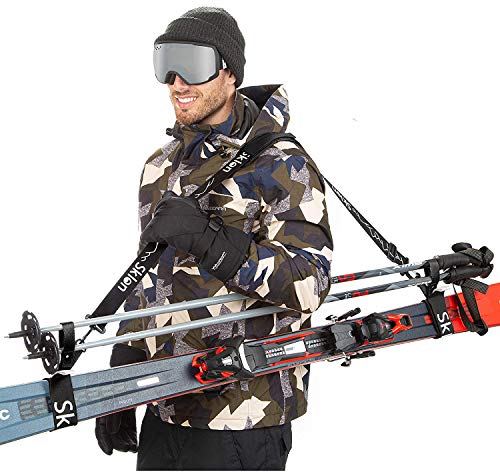
Sklon Ski Strap and Pole Carrier
- Type:
- Carry strap
- Holds:
- Skis and poles
- Use:
- Car park to lift
Fifteen dollars to stop dropping your skis in the car park. It is not glamorous and it will be used every single ski day for years.
Best for: Everyone. Especially anyone walking more than fifty yards to the lift.
What it costs you: It is a strap.

DryGuy Boot and Glove Electric Dryer
- Capacity:
- Boots plus gloves
- Heat:
- Warm air
- Timer:
- Yes
A damp liner is a cold liner, and no sock fixes it. Drying boots overnight is the highest-impact thing you can do about cold feet, and it also roughly doubles liner lifespan.
Best for: Anyone on a multi-day trip, and anyone with cold feet.
What it costs you: Never dry a liner on a radiator or with high heat. Heat damages the foam permanently.

Bosvision Retractable Combination Ski Lock
- Cable:
- 3 ft retractable
- Lock:
- 4-digit combination
- Use:
- Lunch stops
Skis walk off the rack outside the lodge. This will not stop a determined thief with tools and it will absolutely stop the opportunist who picks up the nearest unlocked pair.
Best for: Anyone leaving skis outside a lodge.
What it costs you: A thin cable is cuttable. It is a deterrent, not a vault.

CURREX EdgePro Ski Boot Insoles
- Type:
- Supportive footbed
- Arch:
- Multiple profiles
- Use:
- Ski and snowboard boots
Stock boot insoles are flat sheets of foam. A supportive footbed stops the foot spreading and rolling inside the shell, which is what causes most of the pinch, arch pain and lost edge feel people blame the boot for.
Best for: Almost every boot. The cheapest upgrade with the biggest change in feel.
What it costs you: A custom moulded footbed from a bootfitter is better. This is a large fraction of that for a small fraction of the price.

Booster Strap Intermediate Performance Ski Boot Strap
- Type:
- Elastic power strap
- Replaces:
- Stock velcro strap
- Use:
- Alpine boots
An elastic strap loads progressively instead of hitting a dead stop the way a nylon strap does, which makes a stiff boot flex smoothly and a soft boot feel more supportive. Forty-five dollars for a real change in how a boot skis.
Best for: Anyone whose boot feels either dead or vague through the flex.
What it costs you: Does not fix a boot that is the wrong size or the wrong flex.

UNIHAND Rechargeable Hand Warmers, two pack
- Runtime:
- Up to 20 hours
- Charge:
- USB rechargeable
- Count:
- Two
Rechargeable rather than disposable, so the cost is once rather than every day. They also double as a power bank, which matters when a phone dies in the cold at the worst moment.
Best for: Anyone with cold hands, and every deep-cold day.
What it costs you: Battery output drops in severe cold. Keep them in an inside pocket, not an outer one.

Athletico Rolling Double Ski Bag, 190 cm
- Length:
- 190 cm
- Capacity:
- Two pairs
- Padding:
- Padded, wheeled
Padded and wheeled, sized for two pairs. Airline handling breaks tips and tails, and a padded bag is much cheaper than a topsheet repair or a new ski.
Best for: Anyone flying to ski.
What it costs you: Bulky to store, and a 190 cm bag is oversized on some airlines. Check before you fly.
Specifications are the manufacturer's published figures, not measurements we took. Sizes, prices and stock change constantly, so confirm on the retailer page before buying. We earn commissions from Backcountry and from qualifying Amazon purchases, and every link on this page is one or the other. Where a Backcountry button reads "shop the category" it opens a search for that category rather than that exact model, so it finds comparable gear alongside it.
How we chose
We compared published specifications, materials and stated compatibility across each category, then read verified owner reviews across retailers for the failure modes that specifications never describe: which dryers overheat a liner, which footbeds are too tall for a low-volume shell, and which straps let go of a wet ski. We did not test these items in person. Every figure here is the manufacturer's own published number.
The footbed argument, in more detail
A ski boot works by holding your foot in a fixed shape and transmitting what your ankle and knee do straight into the ski. Every millimetre of movement inside the shell is a millimetre of input that never reaches the edge. Stock insoles are flat because a flat sheet of foam fits every foot equally badly, which is the cheapest thing a factory can put in a box.
Under load, an unsupported arch flattens and the foot lengthens and widens. That is why a boot that felt fine in a shop pinches across the forefoot after two runs, why your toes touch the front on a long traverse, and why some people describe an expensive boot as vague. A supportive footbed stops the collapse, which shortens the foot back to the length the shell was fitted around and puts the ankle back over the middle of the boot.
A custom moulded footbed from a bootfitter is still better, and if you ski a lot it is money well spent. An off-the-shelf supportive bed gets you most of the way there for about a tenth of the price, and it is the correct first thing to try. Read the boot fitting guide before you spend anything at all on a boot problem, because half of them are shell size rather than insole.
Cold feet: the order to fix it in
- Wear one thin sock. Never two, and never a thick hiking sock. Volume inside a ski boot compresses the foot and cuts circulation, and cold feet in skiing are almost always a circulation problem rather than an insulation one. The sock roundup covers this properly.
- Dry the liners every night. Warm moving air, never high heat. This is the single largest improvement available to most people and it costs nothing after the dryer.
- Loosen the top buckle on the lift. Blood returns to the foot when the cuff is not clamped. Two clicks on the chairlift and back on at the top.
- Add a footbed. A collapsed arch presses the foot against the shell in exactly the places that restrict blood flow.
- Then, and only then, consider heat. Rechargeable warmers in the gloves, heated insoles in the boots. Buying heat first is spending money to work around a fit problem you could have fixed for forty dollars.
The two accessories worth more than $100
These fall outside the title but belong in the conversation, because for two specific groups of skiers they are the right purchase. A padded rolling ski bag is worth it for anyone flying to ski, where airline handling breaks tips and tails and a topsheet repair costs more than the bag. A proper roof rack is worth it for anyone driving to the hill with a full car, where the alternative is wet skis soaking an interior and steel edges cutting upholstery.
Worth the money above $100

Thule Ski and Snowboard Rack Carrier
- Capacity:
- Multiple pairs
- Mount:
- Crossbar
- Lock:
- Lockable
Wet skis inside a car soak the interior and edges cut upholstery. Thule racks fit properly and lock, and a rack that does not fit properly is a rack that comes off on the highway.
Best for: Regular drives to the hill with a full car.
What it costs you: Costs fuel economy and needs crossbars you may not have. Check the fit guide for your vehicle.

KULKEA Thermal Trekker Heated Ski Boot Bag, 62 L
- Volume:
- 62 L
- Heat:
- Powered boot warming
- Carry:
- Backpack
Warm boots at the car mean a boot you can actually buckle, which matters most for the stiff boots that are hardest to get into cold. It also carries the whole kit as a backpack rather than a shoulder bag.
Best for: Cold climates, stiff boots, and long walks from the car.
What it costs you: Expensive for a bag, and needs power at the car or the hotel.
Specifications are the manufacturer's published figures, not measurements we took. Sizes, prices and stock change constantly, so confirm on the retailer page before buying. We earn commissions from Backcountry and from qualifying Amazon purchases, and every link on this page is one or the other. Where a Backcountry button reads "shop the category" it opens a search for that category rather than that exact model, so it finds comparable gear alongside it.
Protection is the other cheap category
For snowboarders specifically, the highest value per dollar in the entire sport is a wrist guard at under thirty dollars. Wrist fractures are the most common snowboard injury by a wide margin because a learning rider catches a heel edge, falls backwards and puts a hand out. A guard worn under a glove costs less than a lift ticket and addresses the single most likely way you get hurt.
Protection under $100
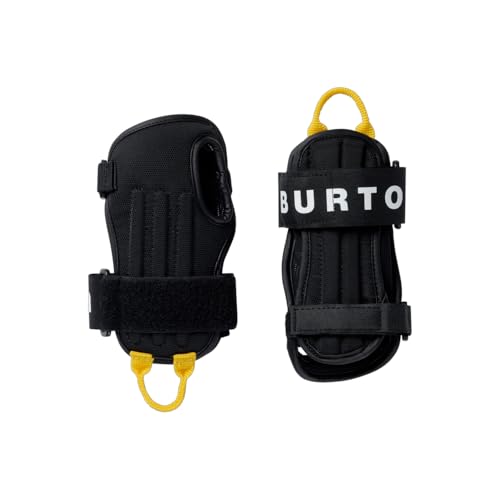
Burton Impact Wrist Guard
- Type:
- Wrist splint
- Fit:
- Under glove
- Use:
- Snowboarding
Wrist fractures are the most common snowboard injury by a wide margin, because a beginner falls backwards and puts a hand down. Twenty-seven dollars against the most likely injury in the sport is the best value purchase on this site.
Best for: Every learning snowboarder, without exception.
What it costs you: Slightly restricts wrist movement, which is the mechanism by which it works.

Qunature Ski Back Protector Vest
- Type:
- Vest with removable pad
- Fit:
- Under jacket
- Panel:
- Detachable
A back protector spreads impact across the panel instead of concentrating it on one vertebra. Park riders and anyone hitting features should wear one, and the removable panel means one vest for two use cases.
Best for: Park riding, and anyone skiing terrain where a backwards fall onto rock is plausible.
What it costs you: Warm, and does nothing for a rotational or compressive spinal injury.

RECCO Rescue Reflector
- Type:
- Passive reflector
- Power:
- None required
- Detection:
- RECCO detector only
A passive reflector that organised rescue services can detect with a RECCO unit. It needs no battery and never fails, and it is genuinely useful for locating a body in a tree well or a slide path.
Best for: Adding to a helmet or jacket that does not already have one.
What it costs you: This is NOT avalanche safety equipment and it does not replace a transceiver. It only works once a rescue team with a detector arrives, and companion rescue in the first fifteen minutes is what actually saves lives.
Specifications are the manufacturer's published figures, not measurements we took. Sizes, prices and stock change constantly, so confirm on the retailer page before buying. We earn commissions from Backcountry and from qualifying Amazon purchases, and every link on this page is one or the other. Where a Backcountry button reads "shop the category" it opens a search for that category rather than that exact model, so it finds comparable gear alongside it.
The RECCO reflector in that group needs a caveat every time it is mentioned. It is a passive reflector that an organised rescue service with a RECCO detector can locate. It is not avalanche safety equipment, it does not replace a transceiver, and it does nothing inside the first fifteen minutes, which is the window in which a companion rescue decides whether someone lives. Avalanche gear only works alongside formal training, and no piece of it ever substitutes for an avalanche course or for reading the regional forecast before every tour.
Tuning gear is the other place small money goes far
A dry base is slow, grabby and genuinely harder to ski, and most recreational skis have never been waxed. A rub-on all-temperature wax costs about thirty dollars and takes ten minutes with no iron at all. A full kit with an iron costs about seventy and pays for itself in two shop tunes. The tuning kit roundup covers the whole shelf, and the waxing guide walks through the process including the edge angles, where a file guide is not optional equipment.
The touring accessories that are not optional
Once you leave the boundary the list changes character, because several of these items stop being conveniences. A headlamp is required on any tour that starts before dawn or runs longer than planned, which describes most tours. A first aid and repair kit matters because a stripped binding screw ends a day as effectively as an injury. A satellite messenger matters because cell coverage in avalanche terrain ranges from patchy to absent.
Touring extras worth carrying

Black Diamond Spot 400-R Rechargeable Headlamp
- Output:
- 400 lumens
- Power:
- Rechargeable
- Rating:
- Weather resistant
Any tour that starts before dawn or runs longer than planned needs a headlamp, and "longer than planned" describes most tours. Four hundred lumens is enough to skin and enough to ski out carefully.
Best for: Every touring pack, all season.
What it costs you: Lithium cells lose capacity in deep cold. Carry it in an inside pocket on the coldest days.

Garmin inReach Mini 2 Satellite Communicator
- Network:
- Iridium satellite
- SOS:
- Two-way with response centre
- Subscription:
- Required
Cell coverage in avalanche terrain ranges from patchy to absent. Two-way satellite messaging means a rescue request that is confirmed rather than hoped for, and it means telling someone you are running late instead of triggering a search.
Best for: Any tour beyond cell coverage, which is most of them.
What it costs you: Needs an active subscription and does nothing for the first fifteen minutes, which is the window that decides an avalanche burial. Companion rescue is still the plan.

Thermos The Rock Vacuum Insulated 1 Litre Bottle
- Volume:
- 1 litre
- Insulation:
- Vacuum stainless
- Use:
- Hot drinks
Water freezes in a hydration hose in an hour below about 20 F, and a dehydrated skier makes worse decisions. A vacuum flask of something hot solves hydration and morale in one item.
Best for: Cold-weather touring and long resort days.
What it costs you: Heavy for the volume. On a warm spring tour a plain bottle is lighter and enough.

Adventure Medical Kits Ultralight Watertight .5
- Size:
- Two person
- Case:
- Watertight
- Use:
- Day tours
A watertight case matters because a soaked kit is a useless kit, and a wet dressing is worse than none. Pair it with a repair kit: a broken binding screw or a torn skin glue can end a tour just as fast as an injury.
Best for: Every touring pack.
What it costs you: A kit is not training. Wilderness first aid is a course, same as avalanche education.
Specifications are the manufacturer's published figures, not measurements we took. Sizes, prices and stock change constantly, so confirm on the retailer page before buying. We earn commissions from Backcountry and from qualifying Amazon purchases, and every link on this page is one or the other. Where a Backcountry button reads "shop the category" it opens a search for that category rather than that exact model, so it finds comparable gear alongside it.
None of that is avalanche equipment either. A transceiver, probe and shovel are the minimum kit that lets a trained partner attempt a rescue, and they only work if everybody in the party has taken a course and practised. Start with the avalanche safety basics and the forecast guide rather than with gear.
What to buy first
If you are starting from nothing, the order is straightforward and it is not this page. Boots first, then a helmet and goggles (the ski goggle roundup starts at under $50), then lessons, then skis, and only then the small things. The buying order guide makes that case in full and the first resort setup prices the whole list with a running total so you can see what the accessories add on top.
And if there is one item on this page that quietly earns its place in every bag regardless of how or where you ski, it is the boot dryer. Warm dry liners in the morning is the closest thing in this sport to free performance.
Frequently asked questions
What is the single best ski accessory under $100?
A supportive footbed, at about forty dollars. Stock ski boot insoles are flat sheets of foam with no arch structure at all, so the foot spreads and rolls inside a shell that was fitted around a foot doing neither. The consequences get blamed on the boot: arch cramp, pinching across the forefoot, numb toes and vague edge feel. A supportive footbed holds the foot in shape and delivers a large fraction of what a custom moulded bed from a bootfitter does, for a small fraction of the price. Nothing else in this price band changes how a ski day feels by as much.
Do heated boot dryers really help with cold feet?
Yes, and more than any sock will. A liner that went into the bag damp comes out cold, and moisture conducts heat away from your foot roughly twenty times faster than dry air does. Drying boots overnight with warm moving air fixes the cause rather than the symptom, and it roughly doubles liner lifespan because damp foam packs out and breaks down faster. The rule that matters: never dry a liner on a radiator, near a fire or with high heat. Boot foam is heat-set at the factory and high heat permanently collapses it, which turns a fit problem into a new pair of boots.
Are boot power straps worth replacing?
On any boot stiffer than a soft beginner flex, yes. A stock nylon velcro strap does nothing until you reach the end of it and then stops dead, so the boot feels either vague or like it hits a wall. An elastic power strap loads progressively across the whole range of the flex, which makes a stiff boot feel smoother to drive and a softer boot feel more supported. It costs about forty-five dollars and takes five minutes to fit. It will not fix a boot that is the wrong size or the wrong flex for you, and no accessory can.
Do I need a ski lock?
If you leave skis on a rack outside a lodge, a cheap combination cable is worth seventeen dollars. It will not stop a determined thief with a cutter and nobody claims otherwise. What it stops is the far more common event: somebody walking past a rack of unlocked skis and picking up a pair. A thin retractable cable turns your skis into the harder option in a rack of thirty pairs, which is all a deterrent has to do. The other habit that costs nothing is splitting the pair across two racks, so a casual thief has to steal twice.
Are rechargeable hand warmers better than disposable ones?
Over a season, comfortably. A rechargeable pair costs about twenty dollars once, runs for most of a ski day and doubles as a phone power bank, which is worth having when a cold battery drops to nothing at the top of the mountain. Disposable air-activated warmers cost a couple of dollars each and add up fast for a regular skier, although they are lighter, need no charging and do not die in deep cold. The honest split is rechargeable for resort days and a couple of disposables in the pack for touring, where weight and reliability in severe cold matter more.
What accessories can I safely skip?
Heated socks, unless you have a diagnosed circulation problem, because a properly fitted boot and a dry liner solve cold feet for a fraction of the money. Goggle fans, which solve a fogging problem usually caused by a goggle jammed against a helmet brim or a face mask directing breath upwards. Ski-specific luggage if you are not flying. Wax-alternative sprays, which are a slower and more expensive way to get less of what a fifteen dollar rub-on wax gives you. And any gadget promising to replace a bootfitting appointment, which is the one thing in skiing that is genuinely worth paying a person for.
How we choose: we compare published manufacturer specifications, published certification standards and verified owner reviews across retailers. We do not test equipment in person, and every figure quoted here is the manufacturer's published number unless we say otherwise. This is researched buying guidance and not professional instruction: binding release values are set by a certified technician on a calibrated jig, and avalanche terrain requires formal training and a current regional forecast that no article can replace.