The best ski socks and gloves
The best ski sock is a thin merino ski-specific sock at under $50 with cushioning over the shin and none across the instep, worn ONE pair at a time. Two socks make feet colder, not warmer, because volume inside a boot compresses the foot and restricts the blood flow that carries heat to your toes.
The best ski sock for most people is the Hylaea merino ski sock at under $50, because it is thin through the foot and padded only where a boot presses. Wear one pair. If you are replacing a drawer of cotton, the Anlisim three-pack at under $50 is the cheapest way to do it properly. For gloves, the Carhartt waterproof insulated glove at under $50 has a genuine waterproof insert at a work-glove price, and for anyone whose hands are always cold, the mitten at under $50 is the fix that actually works.
Socks and gloves are the cheapest items in a ski kit and they are responsible for a disproportionate share of miserable days, because they sit at the two places where circulation fails first. Almost everything worth knowing about both comes down to one principle: warmth at the extremities is a blood flow problem before it is an insulation problem.
The one thin sock rule
A ski boot shell is fitted around a measured foot. Every millimetre you add inside it is subtracted from the space your foot occupies, and a compressed foot has restricted blood flow. Blood is the heat delivery system. So the intuitive fix, adding a second sock, directly causes the problem it is meant to solve, and it also puts a layer of shifting material between your foot and the boot, which blurs every input you send to the ski.
The correct sequence for cold feet is: one thin sock, dry liners every night, top buckle loosened on the lift, a supportive footbed to stop the arch collapsing and pressing the foot into the shell, and only then heat. Most people work that list backwards and start by buying heated socks, which is expensive and treats the symptom.
<!-- gift-guides-xlink -->The picks
The ladder is green circle, blue square, black diamond, the same three tiers used across this site. Green is the cheapest way to stop wearing the wrong thing. Blue is the buy-once sock and the glove and liner that cover most days. Black is the deep-cold answer.
Sock and glove picks
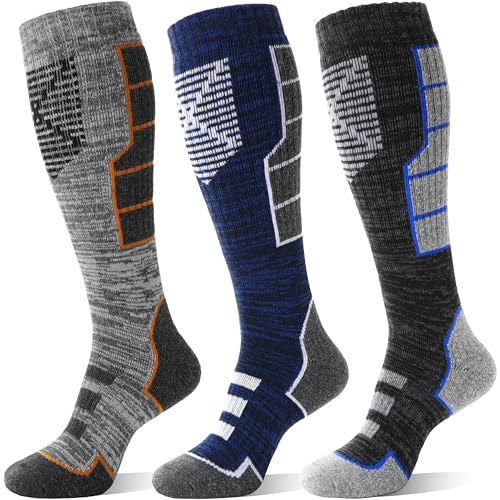
Anlisim Merino Wool Ski Socks, three pairs
- Fabric:
- Merino blend
- Height:
- Over the calf
- Count:
- Three pairs
Three pairs for the price of one name-brand pair. The rule that matters more than the brand: ONE thin sock, never two and never a thick one. Volume in a ski boot cuts circulation and cold feet come from a tight boot, not a thin sock.
Best for: Anyone still wearing two pairs of cotton socks in ski boots.
What it costs you: Less durable and less precisely cushioned than a purpose-built ski sock.

Hylaea Merino Wool Ski Socks
- Fabric:
- Merino blend
- Cushion:
- Targeted shin and shin
- Height:
- Knee high
Targeted cushioning over the shin and none across the instep, which is what a ski sock is for. A hiking sock in a ski boot bunches exactly where the boot needs to grip.
Best for: Full days in a properly fitted boot.
What it costs you: Nothing fixes a badly fitted boot. Buy the bootfit first.

Carhartt Mens Waterproof Insulated Knit Cuff Glove
- Insulation:
- Synthetic
- Waterproof:
- Insert
- Cuff:
- Knit
A genuinely waterproof insert at a work-glove price. Most cheap ski gloves are water resistant, which means wet hands by lunchtime on a warm day.
Best for: Cold-to-moderate resort days, and anyone hard on gloves.
What it costs you: A knit cuff lets snow in on a deep day. Not a powder glove.

Minus33 Merino Wool Glove Liners
- Fabric:
- Merino wool
- Use:
- Under gloves or alone
- Weight:
- Liner weight
Twenty dollars that lets you take the outer glove off to work a buckle, a binding or a beacon without putting a bare hand on cold metal. On a transition in a wind that matters more than the outer glove does.
Best for: Touring transitions, and anyone whose hands go numb the moment a glove comes off.
What it costs you: Not warm on their own below freezing, and they soak through fast when handling snow.
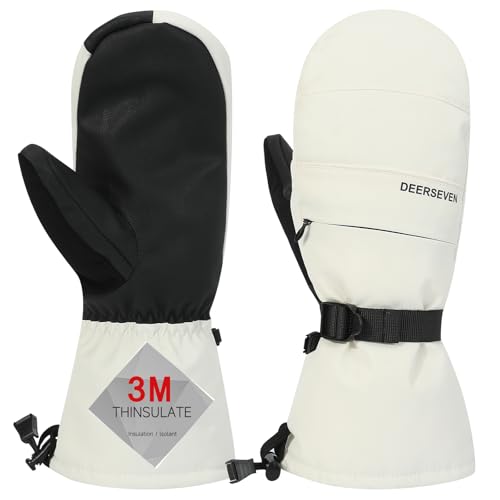
OMECHY Insulated Waterproof Ski Mittens
- Type:
- Mitten
- Insulation:
- Synthetic, heavy
- Cuff:
- Long gauntlet
Mittens are warmer than gloves and it is not close: fingers share heat instead of each radiating alone. If your hands go numb every cold day, this is the fix, and it costs less than heated gloves.
Best for: Deep cold, and anyone with poor circulation in the hands.
What it costs you: You lose dexterity, which matters for buckles, zips and anything to do with a rescue.
Specifications are the manufacturer's published figures, not measurements we took. Sizes, prices and stock change constantly, so confirm on the retailer page before buying. We earn commissions from Backcountry and from qualifying Amazon purchases, and every link on this page is one or the other. Where a Backcountry button reads "shop the category" it opens a search for that category rather than that exact model, so it finds comparable gear alongside it.
How we chose
We compared published fibre compositions, cushioning maps, cuff heights, stated waterproof constructions and cuff designs across the range, then read verified owner reviews across retailers for the two things a specification never tells you: whether a sock bunches under a boot buckle after a full day, and whether a glove described as waterproof has an actual membrane insert or a coating that gives up by lunchtime. We did not test these in person and we do not claim to have.
What a ski sock has that a hiking sock does not
| Feature | Why it matters in a boot |
|---|---|
| Thin through the foot | Volume compresses the foot and cuts circulation. Thickness is not warmth here |
| Shin padding | The boot tongue presses hard on the shin. This is where shin bang comes from |
| No instep cushioning | Material over the instep bunches under the buckle and creates a pressure point |
| Over the calf height | The sock top must clear the boot cuff, or the cuff edge digs into your calf all day |
| Merino or merino blend | Keeps insulating damp, and a ski sock is damp by lunchtime whatever you do |
| Flat toe seam | A ridged seam across the toes is a blister in a shell that has no room to spare |
Gloves: what to actually look for
The word waterproof is used loosely in glove marketing, and the distinction is worth knowing. A glove with a membrane insert has a separate waterproof bootie sewn inside the shell, and it keeps water out for the life of the glove. A glove described as water resistant has a treated outer with nothing behind it, and it wets through in wet snow within a couple of hours. On a cold dry day the difference is invisible. On a warm spring day it is the whole day.
The second thing to check is the cuff. A knit cuff is comfortable and lets snow in during a deep day or a fall, so it belongs on a resort glove used in firm conditions. A long gauntlet cuffs over the jacket sleeve and seals the wrist, which is what you want in powder and on any day you expect to be face down in it.
Third, insulation type. Synthetic is the correct choice for a glove, for the same reason it is the correct choice for a ski midlayer: hands get wet, and down that has gone flat is a wet rag with no loft left. The insulation comparison covers the general principle in full.
The mitten argument
Mittens are meaningfully warmer than gloves and the physics is simple: four fingers sharing one air space heat each other and present far less surface area to the cold than four separate finger tubes. For anyone with poor circulation, mittens are the single most effective purchase available and they cost about a third of what heated gloves do.
The cost is dexterity, and in the backcountry that cost is real. Working a binding heel, a skin tail clip, a transceiver or a pack buckle in a mitten is slow, and slow matters in a rescue. The answer is a merino liner glove underneath, so the mitten comes off for the fiddly job and your hand is never bare against cold metal.
Heat, when you have run out of other options
Rechargeable hand warmers cost about twenty dollars for a pair, run most of a ski day and double as a phone power bank, which matters because a cold battery can drop from half charge to nothing without warning at the top of a mountain. They are the sensible last step after the free fixes.
Rechargeable hand warmers

UNIHAND Rechargeable Hand Warmers, two pack
- Runtime:
- Up to 20 hours
- Charge:
- USB rechargeable
- Count:
- Two
Rechargeable rather than disposable, so the cost is once rather than every day. They also double as a power bank, which matters when a phone dies in the cold at the worst moment.
Best for: Anyone with cold hands, and every deep-cold day.
What it costs you: Battery output drops in severe cold. Keep them in an inside pocket, not an outer one.
Specifications are the manufacturer's published figures, not measurements we took. Sizes, prices and stock change constantly, so confirm on the retailer page before buying. We earn commissions from Backcountry and from qualifying Amazon purchases, and every link on this page is one or the other. Where a Backcountry button reads "shop the category" it opens a search for that category rather than that exact model, so it finds comparable gear alongside it.
Two notes. Battery output falls in severe cold, so warmers live in an inside pocket rather than an outer one until you need them. And on a touring day, a hot drink in a vacuum flask does more for core temperature, and therefore for hand temperature, than any warmer does.
Where socks and gloves sit in the system
They are the ends of the layering system rather than a separate thing. A cold core shuts down circulation to the fingers and toes before it lets your body temperature drop, which means an underdressed torso presents as cold hands. Fix the middle and the ends usually follow. The layering guide explains the whole system, the base layer roundup covers the layer against the skin, and the layering chart is the printable version.
On the foot side, everything downstream of the sock is bootfitting. The boot fitting guide is the page to read before you spend money on a cold-feet problem, and the accessories roundup covers footbeds and boot dryers, which between them solve more cold feet than every sock ever sold.
Frequently asked questions
Should I wear two pairs of socks to keep my feet warm?
No, and this is the most common and most counterproductive habit in skiing. A ski boot is fitted around a specific foot volume, and every extra millimetre of sock compresses the foot and restricts blood flow. Blood is what carries heat to your toes, so two socks makes feet colder, not warmer, while also blurring the connection between your foot and the boot. Wear one thin ski-specific sock. If your feet are still cold, the causes in order of likelihood are a damp liner, a boot buckled too tight, a collapsed arch pressing the foot against the shell, and only then the sock.
What makes a ski sock different from a normal sock?
Three things. It is thin through the foot, because volume is the enemy inside a boot. It has targeted cushioning over the shin and around the ankle bone, where a boot presses, and none across the instep, where extra material bunches under the buckle. And it is tall, reaching above the boot cuff so the top edge never sits under the shell, which is where a shorter sock digs a line into your calf. A cushioned hiking sock is thick in exactly the wrong places and is a common cause of shin bang and hot spots that get blamed on the boot.
Are mittens really warmer than gloves?
Yes, and it is not a close contest. Fingers in a mitten share a single air space and heat each other, while in a glove each finger radiates heat independently through a much larger surface area. For anyone with poor circulation in the hands or anyone skiing in genuinely deep cold, mittens are the cheapest and most reliable fix available, and they cost less than heated gloves. The trade is dexterity: buckles, zips, phone screens, skin tail clips and anything to do with an avalanche rescue are all harder in a mitten, which is why a thin liner glove underneath is worth the twenty dollars.
What actually keeps hands warm on cold days?
In order: keeping your core warm, because a cold body shuts down blood flow to the extremities first; keeping the gloves dry, because a wet insulation layer conducts heat away rather than trapping it; mittens rather than gloves; a liner glove so the outer never has to come all the way off; and finally a heat source. Most people reach for the last item first. If your torso is underdressed, no glove on the market will keep your fingers warm, and that is why the layering system matters more to cold hands than the glove does.
How many pairs of ski socks do I need?
Three is comfortable for a normal season and two is workable. Merino resists odour well enough that a pair can be aired and worn again, but a ski sock is damp at the end of a day and a damp sock the next morning is a cold foot, so you want a dry pair each day. Three pairs also means you always have one clean when the wash cycle slips. Buy the same model in a three-pack rather than three different socks, because a sock you know the fit of is worth more than variety in a drawer.
Do glove liners actually do anything?
They do the one job that matters at a transition: they let you take the outer glove off to work a buckle, a binding, a beacon or a skin tail clip without putting a bare hand on cold metal. A bare hand on a cold aluminium binding in a wind loses heat fast enough that it takes several minutes of skiing to recover, and that is time you spend making worse decisions with numb fingers. They also add a little warmth inside the glove and they wick sweat off the palm. Twenty dollars, and they live in the pack all season.
How we choose: we compare published manufacturer specifications, published certification standards and verified owner reviews across retailers. We do not test equipment in person, and every figure quoted here is the manufacturer's published number unless we say otherwise. This is researched buying guidance and not professional instruction: binding release values are set by a certified technician on a calibrated jig, and avalanche terrain requires formal training and a current regional forecast that no article can replace.