Best Midlayers for Skiing 2026
The best ski midlayer for most people is a grid fleece at under $100, because the raised squares trap air while the channels between them move sweat out, so it keeps insulating while you are working. Choose synthetic insulation over down for anything worn while skiing: down loses its loft when wet, and skiing is wet from snow outside and sweat inside.
The best midlayer for skiing is a grid fleece at under $100, and it is the single most useful garment in the whole layering system. If you want one warm layer that also works as a standalone jacket in the car park, the Columbia Powder Lite II at under $250 is the value synthetic puffy. If you tour, the layer you eventually want alongside the fleece is an air permeable synthetic piece like the Rab Xenair Alpine Light at under $250, which is the jacket that lives in the pack and comes out at every transition.
Ski midlayers compared at a glance
All four picks side by side. Fabric and insulation are the manufacturers' published descriptions; prices are Amazon listing prices checked in 2026 and change often, so check the live price before buying.
| Pick | Tier | Budget | Fabric | Use | Best for |
|---|---|---|---|---|---|
| Columbia Mens Powder Lite II Insulated Jacket | Beginner | Under $250 | Synthetic | Midlayer or standalone | A first midlayer, and cold resort days. |
| Squak Mountain Co. Microgrid Fleece Hoodie | Intermediate | Under $100 | Grid fleece | Midlayer | Everyone. Resort midlayer and the layer a tourer climbs in. |
| Marmot Airfleece Mens Full-Zip Midlayer Hoody | Intermediate | Under $250 | Air-permeable fleece | Cold resort, touring | Cold days and high-output touring. |
| Rab Mens Xenair Alpine Light Hooded Insulated Jacket | Expert | Under $250 | Synthetic, air permeable | Transitions and belays | Touring transitions, cold summits, and standing around in the wind. |
The midlayer is where a layering system is usually won or lost, because it is the layer people choose by how warm it feels standing in a shop rather than by how it behaves when they are working hard in a cold wind.
<!-- gift-guides-xlink -->Why grid fleece is the default
A grid fleece is knitted so the inside face is a pattern of raised squares separated by channels. The squares stand off your skin and hold a layer of still air, which is what insulation actually is. The channels between them are thinner, so moisture moves along them and out to the face of the fabric where it can evaporate or be pushed further out by the shell.
The result is a fabric that keeps working while you are producing sweat, which is the exact condition where a solid fleece of the same weight fails. A solid fleece is one continuous mass of fibre, so moisture has to soak through it uniformly, and while it is soaking it is conducting heat away from you rather than trapping it. That difference is why grid fleece went from a niche military fabric to the default midlayer across mountain sports.
The picks, at three budgets
The ladder is green circle, blue square, black diamond, the same three tiers used everywhere on this site. Green is the value synthetic puffy that doubles as a standalone jacket. Blue is the grid fleece almost everybody should own plus the warmer air permeable fleece for cold days. Black is the transition jacket for touring.
Midlayer and insulation picks
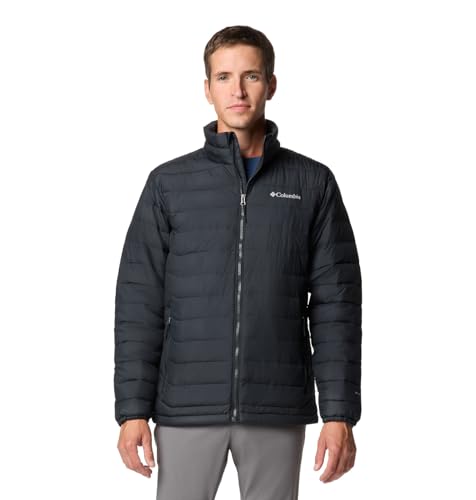
Columbia Mens Powder Lite II Insulated Jacket
- Insulation:
- Synthetic
- Use:
- Midlayer or standalone
- Face:
- Water resistant
Synthetic insulation keeps most of its warmth wet, which is the correct choice for skiing where down is not. This works as a midlayer under a shell and as a jacket on its own in the car park.
Best for: A first midlayer, and cold resort days.
What it costs you: Bulkier and heavier than down for the same warmth, and not very breathable if you are working.
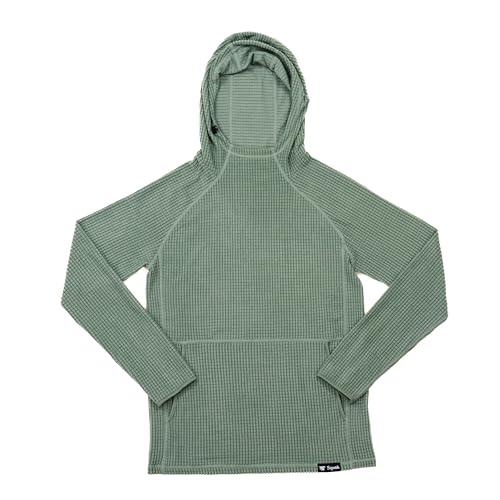
Squak Mountain Co. Microgrid Fleece Hoodie
- Fabric:
- Grid fleece
- Weight:
- Light
- Use:
- Midlayer
Grid fleece is the single most useful layer in snow sports. The grid traps air in the squares and moves moisture along the channels, so it insulates while you are working instead of soaking through the way a solid fleece does.
Best for: Everyone. Resort midlayer and the layer a tourer climbs in.
What it costs you: Not windproof and not warm on its own when you stop. It is a system component.

Marmot Airfleece Mens Full-Zip Midlayer Hoody
- Fabric:
- Air-permeable fleece
- Fit:
- Layering
- Use:
- Cold resort, touring
Air permeability is the specification behind the phrase "breathable": a fleece that lets air through dumps heat when you are climbing and traps it when you zip a shell over it. That is one garment doing two jobs.
Best for: Cold days and high-output touring.
What it costs you: Pricey for a fleece, and warmer than you want on a mild day.
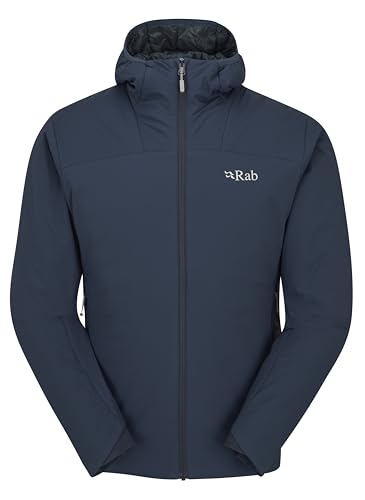
Rab Mens Xenair Alpine Light Hooded Insulated Jacket
- Insulation:
- Synthetic, air permeable
- Face:
- Wind resistant
- Use:
- Transitions and belays
The jacket that lives in a touring pack and comes out at every transition. Air-permeable synthetic insulation can be worn while moving in deep cold without becoming a sauna, which down cannot do.
Best for: Touring transitions, cold summits, and standing around in the wind.
What it costs you: Expensive for a layer you spend most of the day carrying. That is exactly what it is for.
Specifications are the manufacturer's published figures, not measurements we took. Sizes, prices and stock change constantly, so confirm on the retailer page before buying. We earn commissions from Backcountry and from qualifying Amazon purchases, and every link on this page is one or the other. Where a Backcountry button reads "shop the category" it opens a search for that category rather than that exact model, so it finds comparable gear alongside it.
How we chose
We compared published fabric constructions, insulation types and weights, stated air permeability where a manufacturer publishes it, face fabric treatments and cut across the range, then read verified owner reviews across retailers for the two things a specification cannot describe: whether a piece is genuinely wearable while climbing, and whether the fit allows a shell over it without binding at the shoulders. We did not test these in person and we do not claim to have.
Down against synthetic, for skiing specifically
| Down | Synthetic | |
|---|---|---|
| Warmth per gram | Far better. Nothing else is close | Heavier and bulkier for the same warmth |
| When it gets wet | Loft collapses, insulation goes to almost nothing | Loses a fraction of its warmth and keeps working |
| Drying | Hours, and needs mechanical action to reloft | Fast, often within a run or two of body heat |
| Packed size | Smaller, which matters in a touring pack | Bulkier, though modern synthetics have closed the gap |
| Cost | Higher for equivalent warmth | Lower, and repairs cheaply |
| Right for skiing? | Only for after skiing, or in a hut | Yes, for anything worn on the hill |
That table is the whole argument and it resolves the same way every time in snow sports, because the activity is fundamentally wet. The full comparison goes into fill power, the hydrophobic down treatments and where down still wins.
Two thin layers beat one thick one
A single thick midlayer gives you exactly two states: wearing it and not wearing it. Two thin layers give you three, and the middle state is the one you spend most of the day in. That is the entire practical argument for a layering system and it is why a grid fleece and a light puffy outperform a single heavy fleece at almost every temperature.
It also has a comfort consequence people underrate. Taking a layer off in a wind means opening your shell, which means losing the warm air inside it and getting your base layer cold. With two thin layers, most adjustments happen by opening a zip or dropping the puffy into the pack at a transition, without stripping down at all.
The transition jacket, and why it is a different thing
On a tour, you climb for an hour or two producing a lot of heat, then stop at the top to change over, wet with sweat, in whatever wind is present. Your body goes from generating heat to generating none in the space of about thirty seconds. That is the coldest moment of the day and it is what a transition jacket exists for.
It needs to be warm out of proportion to its weight, go on over everything including the shell, and come off again fast. Air permeable synthetic insulation is ideal because you can leave it on for the first few minutes of the descent or the first few minutes of the next climb without immediately cooking. A down jacket is the wrong tool because it goes on over a wet shell and then has to be packed damp.
Fit notes that matter more than the fabric
- It has to fit under the shell you own. A midlayer that binds at the shoulders under a jacket compresses the insulation, and compressed insulation does not insulate.
- A hood is worth it on the fleece. A thin hood under a helmet is the warmest few grams in the system, and it fills the gap between goggle and collar.
- Long in the body. A midlayer that rides up leaves a cold band at your waist that a jacket alone will not cover.
- Check the pockets against a hip belt. Hand pockets under a pack belt are unusable, which is why touring pieces put them higher.
- Full zip beats a half zip for skiing. A full zip vents completely and comes off without removing your helmet, which a pullover does not.
Where the midlayer sits in the system
Three layers, one job each, and they only work together. The base layer moves moisture off your skin, the midlayer holds warm air, and the shell blocks wind and water while venting what you produce. Skip or overweight any one of them and the system fails in a way that feels like being sweaty and cold simultaneously, which is the single most common complaint in skiing.
The layering guide explains the whole thing, the layering calculator turns a forecast into a kit list split by resort and touring, and the shell against insulated jacket comparison is the decision this page assumes you have already made.
Sources
- Fabric, insulation type and intended use: the published product specifications from Columbia, Squak Mountain Co., Marmot and Rab for each item listed.
- How down and synthetic insulation behave when wet: the manufacturers' own care and insulation guidance, summarised in the down against synthetic comparison.
- Temperature bands for what to wear: the layering calculator on this site.
Frequently asked questions
What is a mid layer?
A mid layer is the insulating layer worn between a base layer, which moves sweat off your skin, and a shell, which blocks wind and snow. Its job is to hold warm air. For skiing that usually means a grid fleece or a thin synthetic insulated jacket, and on cold days two thin mid layers rather than one thick one.
Is a down midlayer good for skiing?
Down is the warmest insulation for its weight, but it loses most of its loft when it gets wet, and skiing is wet from snow on the outside and sweat on the inside. That makes down a poor choice for anything worn while moving. A down jacket can still make sense as a warm layer for standing still in dry cold, while synthetic insulation or fleece is the safer layer to ski in.
What is the best midlayer for skiing?
A grid fleece, for almost everyone. The fabric is knitted with raised squares on the inside face and channels between them, so the squares trap air against your skin while the channels move moisture along and out. That combination is what lets a grid fleece keep insulating while you are working, where a solid fleece of the same weight simply soaks. It is the layer a tourer climbs in and the layer a resort skier wears under a shell on most days, and at around sixty-five dollars it is the highest value garment in the whole layering system.
Should a ski midlayer be down or synthetic?
Synthetic, for anything worn while skiing. Down has the better warmth to weight ratio by a wide margin, but it works by lofting, and loft collapses when it gets wet. Skiing is a wet activity from two directions at once: snow melting on the outside and sweat arriving on the inside. Wet down is a heavy rag with no insulating value that then takes a very long time to dry. Synthetic insulation loses a fraction of its warmth wet and recovers quickly. Down still has a place in a ski kit, as the jacket that lives in the car or in a hut and comes out when you have stopped for the day.
Do I need both a fleece and a puffy?
If you tour, yes, and they do different jobs. The grid fleece is what you move in, thin enough that you can climb in it without overheating. The synthetic puffy is what goes over everything at a transition, when you have stopped, are wet with sweat and the wind has found you. It comes back off before you start moving again. For resort skiing one insulating layer is usually enough, and which one depends on the temperature: a grid fleece on a spring day, a light synthetic puffy on a cold one.
What does air permeable insulation mean?
It means the fabric and the insulation are built to let air pass through rather than blocking it, so heat and vapour escape when you are working hard and are retained when you stop or when you zip a shell over the top. A conventional puffy with a tightly woven face fabric is essentially a wind layer with insulation inside, which is warm standing still and a sauna the moment you start climbing. Air permeable pieces can be worn while moving in deep cold, which is exactly what a tourer needs and what down cannot do. The trade is that they are less warm standing in a wind without a shell over them.
How thick should a midlayer be?
Thinner than most people buy. The most common layering mistake is a thick midlayer chosen for how warm it feels in a shop, which then means you are overheating within two runs and sweating into a system that has to dry before you get cold. A light grid fleece plus a shell handles a surprisingly wide range because you can vent the shell, and adding a thin puffy on top extends it further. Two thin layers beat one thick one at every temperature, because two layers give you three configurations and a thick layer gives you one.
Can I use a hoodie or a normal fleece as a midlayer?
A technical fleece works fine, and a cotton hoodie is as wrong as a cotton base layer for the same reason: it absorbs sweat, holds it against you and stays cold for hours. A solid synthetic fleece is a perfectly reasonable midlayer that is simply less efficient than a grid fleece, because it moves moisture more slowly and weighs more for the same warmth. If you already own one, ski in it and spend the money elsewhere. If you are buying, the grid construction is worth the small premium and it is the piece you will still be wearing in five years.
How we choose: we compare published manufacturer specifications, published certification standards and verified owner reviews across retailers. We do not test equipment in person, and every figure quoted here is the manufacturer's published number unless we say otherwise. This is researched buying guidance and not professional instruction: binding release values are set by a certified technician on a calibrated jig, and avalanche terrain requires formal training and a current regional forecast that no article can replace.