Shell and midlayer vs an insulated jacket
An insulated jacket is warm at one temperature. A shell plus a grid fleece plus a thin synthetic puffy gives four configurations covering roughly a forty degree range for similar total money, and the shell outlives two or three midlayers. Buy the insulated jacket only if you ski a few days a year in one predictable climate.
This is the outerwear decision that shapes every other clothing purchase, and it resolves on a principle rather than on a specification: modularity beats optimisation. An insulated jacket is optimised for one temperature. A shell with separate insulation is adjustable across the whole season. Skiing takes place across a very wide range of conditions, often within the same day, which is why the modular answer wins for anyone who skis regularly.
The comparison in one table
| Shell plus midlayers | Insulated jacket | |
|---|---|---|
| Temperature range covered | Roughly 40 degrees, in four configurations | Roughly 15 degrees, plus a zip |
| Up-front cost | Higher. Shell plus fleece under $400 | Lower. under $100 to under $250 |
| Cost across five seasons | Lower. The shell outlives the midlayers | Higher. Insulation is what wears out |
| Works for touring | Yes. Climb in the fleece, shell in the pack | No. Far too warm to climb in |
| Simplicity | You have to think about it each morning | Put it on and go |
| Packability | Layers compress and stow separately | One bulky item, all or nothing |
| Best for | Anyone skiing more than about ten days a year | Few days a year, one climate, or children |
Why the range argument is decisive
Consider a single midwinter day at a resort: a windy single-digit morning on an exposed chairlift, a mid-morning of hard work in trees, a mild sunny lunch on a deck, and a cold windy last hour. That is a thirty degree swing in effective temperature within six hours, and it is completely ordinary.
An insulated jacket handles that with a main zip and possibly pit zips, which is a narrow band of adjustment. A shell system handles it by removing or adding a layer, which changes the insulating value substantially rather than marginally. Over a season, the difference is that one skier is comfortable most of the time and the other is too warm in the middle of the day and too cold at the ends of it.
The four configurations
- Base layer plus shell. Spring, and anything where you are working hard. Warm enough while moving, cool enough that you do not soak the base layer.
- Base plus grid fleece plus shell. The everyday resort configuration for most of the winter, and the touring configuration on a cold climb.
- Base plus fleece plus puffy plus shell. Deep cold, lift days, and standing around. The full stack.
- Base plus fleece plus puffy over the shell. The touring transition configuration, where the puffy goes over everything for the ten minutes you are stopped and comes off before you start moving again.
That fourth configuration is the one an insulated jacket cannot reproduce at all, and it is the single most useful thing about the system for anyone who tours. The midlayer roundup covers why a grid fleece and an air permeable synthetic puffy are the right two pieces.
Midlayers for the system
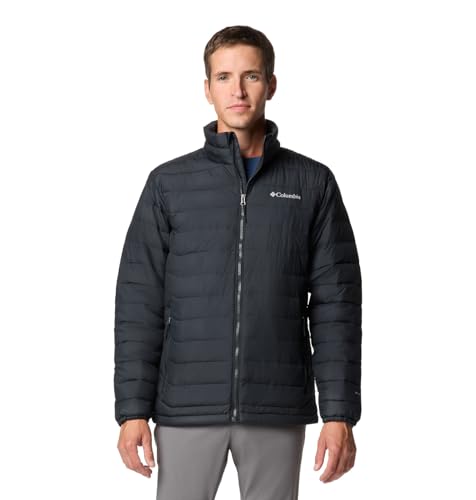
Columbia Mens Powder Lite II Insulated Jacket
- Insulation:
- Synthetic
- Use:
- Midlayer or standalone
- Face:
- Water resistant
Synthetic insulation keeps most of its warmth wet, which is the correct choice for skiing where down is not. This works as a midlayer under a shell and as a jacket on its own in the car park.
Best for: A first midlayer, and cold resort days.
What it costs you: Bulkier and heavier than down for the same warmth, and not very breathable if you are working.
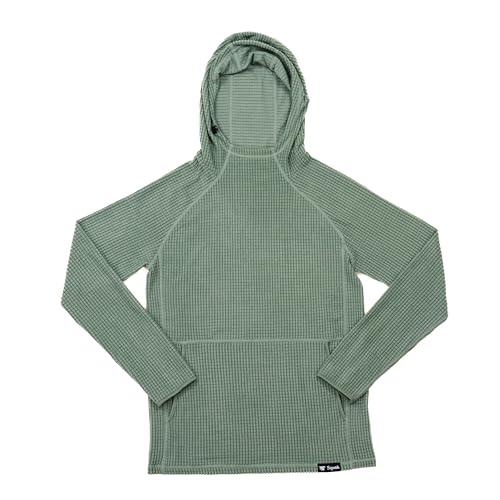
Squak Mountain Co. Microgrid Fleece Hoodie
- Fabric:
- Grid fleece
- Weight:
- Light
- Use:
- Midlayer
Grid fleece is the single most useful layer in snow sports. The grid traps air in the squares and moves moisture along the channels, so it insulates while you are working instead of soaking through the way a solid fleece does.
Best for: Everyone. Resort midlayer and the layer a tourer climbs in.
What it costs you: Not windproof and not warm on its own when you stop. It is a system component.

Marmot Airfleece Mens Full-Zip Midlayer Hoody
- Fabric:
- Air-permeable fleece
- Fit:
- Layering
- Use:
- Cold resort, touring
Air permeability is the specification behind the phrase "breathable": a fleece that lets air through dumps heat when you are climbing and traps it when you zip a shell over it. That is one garment doing two jobs.
Best for: Cold days and high-output touring.
What it costs you: Pricey for a fleece, and warmer than you want on a mild day.
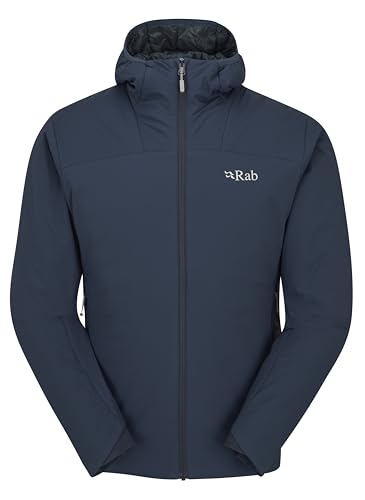
Rab Mens Xenair Alpine Light Hooded Insulated Jacket
- Insulation:
- Synthetic, air permeable
- Face:
- Wind resistant
- Use:
- Transitions and belays
The jacket that lives in a touring pack and comes out at every transition. Air-permeable synthetic insulation can be worn while moving in deep cold without becoming a sauna, which down cannot do.
Best for: Touring transitions, cold summits, and standing around in the wind.
What it costs you: Expensive for a layer you spend most of the day carrying. That is exactly what it is for.
Specifications are the manufacturer's published figures, not measurements we took. Sizes, prices and stock change constantly, so confirm on the retailer page before buying. We earn commissions from Backcountry and from qualifying Amazon purchases, and every link on this page is one or the other. Where a Backcountry button reads "shop the category" it opens a search for that category rather than that exact model, so it finds comparable gear alongside it.
Cost, over time rather than at the till
The insulated jacket wins at the till and loses over five seasons, for a reason that is easy to miss: insulation is the component that fails. Synthetic insulation compresses and loses loft with repeated washing and packing, down loses fill power the same way, and both eventually leave you with a jacket that looks fine and is no longer warm.
A shell has no insulation to lose. It fails through abrasion and delamination, which takes far longer, and its performance is largely restorable by washing and reproofing. So the long-run pattern is one shell and a rotating cast of midlayers, which is cheaper than a rotating cast of insulated jackets, and the midlayers themselves double as everyday clothing in a way an insulated ski jacket does not.
When to just buy the insulated jacket
There is a real case and it deserves to be stated plainly rather than dismissed. If you ski three or four days a year, in one climate, and the appeal of a system is precisely zero, an insulated jacket is simpler, cheaper up front and entirely adequate. Buying a modular system for that skier is optimising something they were never going to use.
The same is true for children, where one garment that goes on and stays on beats a system that requires them to make decisions on a cold chairlift, and for very cold dry low-output skiing where you are on a lift rather than climbing.
The 3-in-1, which is neither and both
A 3-in-1 pairs a waterproof outer with a zip-out insulated liner, giving you three garments for one price. As a first ski jacket it is a genuinely sensible purchase, because it covers a cold day and a mild day without a second buy, and it is exactly what the beginner tier on this site recommends.
The compromises are worth knowing. The liner is rarely as good as a midlayer you would have chosen, and it is usually not a grid fleece. The attachment system adds bulk and weight to both pieces. And the outer is generally a coated or two-layer fabric rather than a proper three-layer construction, so it wets out sooner in sustained wet snow. It is a first-season answer rather than a permanent one.
Shells, insulated jackets and pants

33,000ft Mens Hooded Waterproof 3-in-1 Ski Jacket
- Construction:
- 3-in-1, zip-out liner
- Waterproof:
- Coated
- Use:
- Resort
A zip-out liner is two jackets for the price of one and covers a cold day and a spring day without a second purchase. For a first season at a resort that is the right trade.
Best for: A first ski jacket for resort days.
What it costs you: A coated fabric wets out in sustained wet snow, and the breathability is not enough for climbing in.

Columbia Womens Tipton Peak IV Insulated Jacket
- Insulation:
- Synthetic
- Waterproof:
- Coated with taped seams
- Use:
- Resort
A known brand at a budget price with taped seams, which is the detail that separates a jacket that keeps snow out from one that leaks at every stitch line after an hour of sitting on a chairlift in wet snow.
Best for: Resort skiing in cold, drier climates.
What it costs you: Fixed insulation. On a warm spring day there is no way to take the warmth out.

Helly Hansen Sogn Shell 2.0 Jacket
- Construction:
- Uninsulated shell
- Waterproof:
- Fully taped
- Vents:
- Pit zips
An uninsulated shell plus a separate midlayer beats an insulated jacket at every temperature except one, because you can remove the insulation. This is the switch that turns a resort wardrobe into a system.
Best for: Anyone skiing a range of temperatures, and anyone who has ever been too hot in an insulated coat.
What it costs you: Needs a midlayer bought separately, so the total cost is higher than it looks.
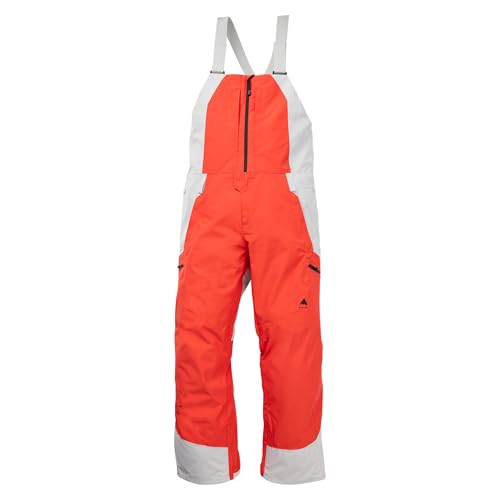
Burton Mens Reserve GORE-TEX 2L Bib Pants
- Fabric:
- GORE-TEX 2L
- Cut:
- Bib
- Seams:
- Fully taped
A bib removes the gap at the waist, which is where snow gets in after a fall in deep snow. Once you have ridden a chairlift with a handful of snow melting against your back you stop considering bibs optional.
Best for: Deep snow, and anyone who falls in it.
What it costs you: Warmer than pants and slower to get out of. That second point matters more than people expect.

Arctix Mens Essential Insulated Bib Overalls
- Insulation:
- Synthetic
- Waterproof:
- Coated
- Cut:
- Bib
Under fifty dollars for an insulated bib. Nothing here is technical, and for a beginner spending on a helmet and lessons instead, that is the right call.
Best for: A first season, sledding, and cold dry days.
What it costs you: Wets out in wet snow, does not breathe, and the insulation cannot be removed.

Mammut Treeline Light Hardshell Hooded Jacket
- Construction:
- Light hardshell
- Waterproof:
- Windproof and breathable
- Use:
- Touring
A light hardshell is what a tourer actually wears: waterproof when the weather turns, packable when it does not, and breathable enough to keep on through a climb. A resort jacket is too warm to skin in.
Best for: Backcountry touring and ski mountaineering.
What it costs you: Thin fabrics are less abrasion resistant. Ski carries and tree skiing wear them.

Roxy Womens Lunalite GORE-TEX 3L Ski Jacket
- Fabric:
- GORE-TEX 3L
- Rating:
- 30K waterproof
- Cut:
- Womens
Three-layer GORE-TEX in a womens cut, uninsulated so it layers properly. Three-layer construction bonds face fabric, membrane and backer into one, which is why it survives ski carries and pack straps where a two-layer garment delaminates.
Best for: Womens resort and touring, layered over a midlayer.
What it costs you: Sizes and colourways run out fast at this price. No insulation, so it needs a midlayer.

Outdoor Research Mens Trailbreaker Tour Pants
- Fabric:
- Softshell, stretch
- Vents:
- Full-length side zips
- Use:
- Ski touring
Softshell rather than hardshell, which is the correct choice for climbing: breathability matters more than waterproofing when the moisture is coming from you. Full-length side zips dump heat without stopping to change.
Best for: Ski touring, and any day where you are generating heat continuously.
What it costs you: Not fully waterproof. In heavy wet snow you want a hardshell pant instead.
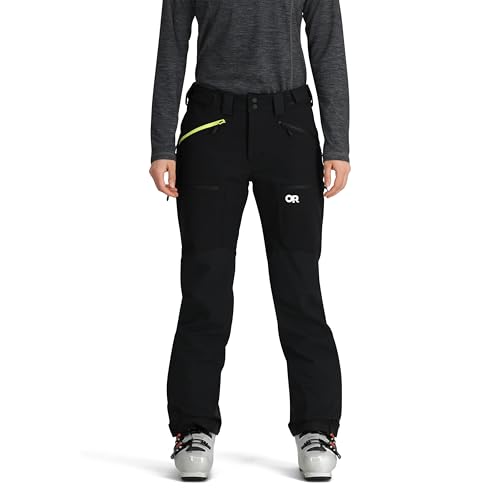
Outdoor Research Womens Trailbreaker Tour Pants
- Fabric:
- Softshell, stretch
- Vents:
- Full-length side zips
- Use:
- Ski touring
The same softshell touring pant cut for a womens fit. Fit through the hip and thigh is what decides whether a pant binds on a high step onto a kick turn, which is the movement a touring pant lives or dies on.
Best for: Womens ski touring.
What it costs you: Softshell is water resistant, not waterproof. Wet storm days want a hardshell.

Dakine Mens Stoker GORE-TEX 3L Snow Bib
- Fabric:
- GORE-TEX 3L
- RECCO:
- Reflector built in
- Seams:
- Fully taped
Three-layer construction bonds the membrane between face fabric and backer, which is why it survives a season of ski carries and pack straps where a two-layer garment delaminates. The RECCO reflector is passive rescue assistance, not avalanche safety.
Best for: Touring and hard resort use in wet climates.
What it costs you: Expensive, and RECCO is not a beacon. Do not let its presence change any decision you make in avalanche terrain.
Specifications are the manufacturer's published figures, not measurements we took. Sizes, prices and stock change constantly, so confirm on the retailer page before buying. We earn commissions from Backcountry and from qualifying Amazon purchases, and every link on this page is one or the other. Where a Backcountry button reads "shop the category" it opens a search for that category rather than that exact model, so it finds comparable gear alongside it.
Hardshell against softshell, briefly
A hardshell is a waterproof membrane garment: it keeps water out and breathes at whatever rate the membrane allows. A softshell is a woven stretch fabric that is water resistant and far more breathable. For resort skiing, where you sit still in falling snow, hardshell is the correct outer. For touring, where the water is mostly your own sweat, a softshell top or pant is often better on a settled day with a light hardshell carried for weather.
The combination that is always wrong is a heavy insulated hardshell for climbing, which becomes a sauna within ten minutes and then leaves you with a soaked base layer at the transition. The shell roundup separates the resort and touring options, and the layering calculator gives a kit list by temperature split the same way.
Where this decision leads
Once you have chosen the system, the remaining clothing questions are settled by the same principle. Down against synthetic resolves towards synthetic for anything worn while skiing, and merino against synthetic resolves towards merino next to the skin. Both follow from the fact that snow sports is wet.
The layering guide puts the whole thing in one place, and the buy-once resort setup prices a complete system with a running total.
Frequently asked questions
Is a shell and midlayer really warmer than an insulated jacket?
Not necessarily warmer at any single temperature, and that is not the argument. A good insulated jacket can be warmer than a shell plus a light fleece on a cold day. The argument is range: a shell plus a grid fleece plus a thin synthetic puffy gives you four usable configurations covering roughly a forty degree band, where an insulated jacket gives you one configuration plus a zip. Since a ski season contains everything from a windless spring afternoon to a windy single-digit morning, the system covers the season and the jacket covers a slice of it.
Does the shell system cost more?
Up front, usually yes, and over time usually no. A decent uninsulated shell plus a grid fleece runs somewhere around three hundred and thirty dollars against roughly ninety to two hundred for an insulated jacket, so the entry cost is higher. What changes the total is replacement: insulation is what wears out, and a shell outlives two or three midlayers because it is not being compressed and washed as often. Buying the shell once and replacing sixty-five dollar fleeces occasionally is cheaper across five seasons than replacing insulated jackets, and the shell is also the piece that keeps working when you start touring.
When is an insulated jacket actually the right choice?
When you ski a small number of days a year in one predictable climate and you do not want to think about a system. That is a real and common situation, and for that skier an insulated jacket is simpler, cheaper up front and perfectly adequate. It is also the right choice for very cold, dry, low-output skiing where you are on a chairlift rather than climbing, and for children, where the simplicity of one garment that goes on and stays on matters more than the ability to fine-tune warmth by ten degrees.
What is a 3-in-1 jacket, and is it a good compromise?
A 3-in-1 is a waterproof outer with a zip-out insulated liner, sold as three garments: shell alone, liner alone, or both together. It is a genuinely reasonable first jacket because it covers a cold day and a mild day for one price. The compromises are that the liner is rarely as good as a midlayer you would choose, the attachment system adds bulk and weight, and the shell is usually a simpler two-layer or coated fabric rather than a proper three-layer. It is the right answer for a first season and rarely the jacket somebody still owns five seasons later.
Do I need a hardshell or is a softshell enough?
For a resort outer layer, hardshell, because you sit still on lifts in falling snow and you need it to keep water out. For touring pants and sometimes for a touring top layer on a settled day, softshell is often better, because the moisture you are fighting is your own sweat and breathability matters more than waterproofing. Many tourers climb in a softshell or just a fleece and carry a light hardshell for the descent and for weather. The wrong combination is a heavy insulated hardshell for climbing, which is a sauna within ten minutes.
How many midlayers do I actually need?
Two covers almost everything: a grid fleece you move in and a thin synthetic puffy you stop in. The fleece lives on your body all day and the puffy lives in the pack. That combination plus a shell handles roughly a forty degree range, and adding a third piece usually buys less than adjusting the two you have. If you only buy one, buy the grid fleece, because it is the more useful of the two on more days and it is the layer you can climb in.
How we choose: we compare published manufacturer specifications, published certification standards and verified owner reviews across retailers. We do not test equipment in person, and every figure quoted here is the manufacturer's published number unless we say otherwise. This is researched buying guidance and not professional instruction: binding release values are set by a certified technician on a calibrated jig, and avalanche terrain requires formal training and a current regional forecast that no article can replace.