Merino vs synthetic base layers
Merino wins for most skiers because wool holds moisture inside the fibre and keeps insulating when damp, and because it resists odour for days. Synthetic dries faster, costs less and survives a pack belt far longer, which suits high-output touring. A merino-dominant blend keeps most of the wool behaviour and roughly doubles the abrasion life. Cotton is always wrong.
The base layer is the one garment in a ski kit that is in continuous contact with your skin and with the moisture you produce. That gives it a single job, moving sweat away while continuing to insulate, and the merino against synthetic argument is entirely about how each fibre handles the second half of that sentence.
The comparison in one table
| Merino | Synthetic | Cotton | |
|---|---|---|---|
| Insulates when damp | Yes, substantially | Partly | No. It actively cools you |
| Drying speed | Slower | Fastest | Slowest by far |
| Odour resistance | Excellent, over days | Poor, and worsens over time | Poor |
| Durability under a pack belt | Poor. Thin merino pills and holes | Excellent | Moderate |
| Price | Higher | Lower | Lowest, and irrelevant |
| Best for | Most skiing, and multi-day trips | High-output touring, and hard wear | Nothing in snow sports |
Where the water goes
This is the mechanism behind every line in that table. Insulation works by trapping still air, so what matters is whether the water your body produces ends up in the air spaces or somewhere else.
Wool absorbs moisture into the interior of the fibre itself, where it is held away from the air spaces between fibres. A merino layer can take on a significant fraction of its own weight in water and still feel dry to the touch and still insulate, because the trapped air is undisturbed. Wool also releases a small amount of heat as it absorbs water vapour, which is a minor effect that is nonetheless real.
Synthetic fibres are essentially non-absorbent, so the moisture sits on the fibre surface and in the spaces between fibres, where it displaces air. That is why a wet synthetic layer feels cold in a way a damp merino one does not. It is also why synthetic dries so much faster: the water is on the outside of the fibre where evaporation can reach it.
Cotton absorbs enormously and holds the water between fibres in the worst of both worlds: the air spaces are flooded and the water is trapped where it evaporates slowly. That is the entire explanation for why cotton is dangerous in cold weather.
Base layer picks
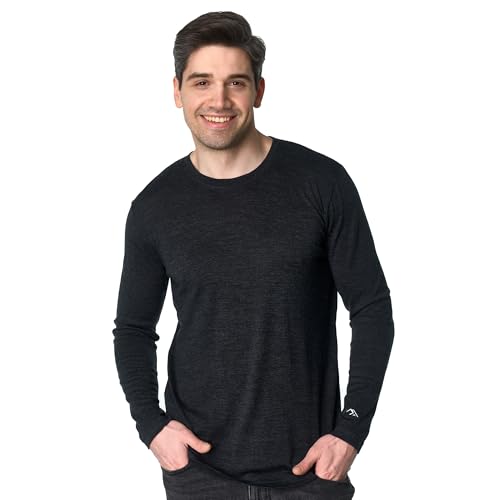
Merino.tech 100 Percent Merino Wool Mens Base Layer Top, 190 weight
- Fabric:
- 100 percent merino
- Weight:
- 190 g/m2
- Use:
- Next to skin
Merino keeps insulating when it is damp and does not develop a smell over a multi-day trip, which are the two reasons it dominates this layer. A 190 weight is the right all-round choice for skiing.
Best for: Everyone, resort and touring, as the layer against the skin.
What it costs you: Wears out faster than synthetic and costs more. Cotton is the only genuinely wrong answer here.

Merino.tech Merino Wool Mens Base Layer Pants, 165 weight
- Fabric:
- 100 percent merino
- Weight:
- 165 g/m2
- Use:
- Under shell pants
Lighter than the top on purpose. Legs generate heat and sit inside insulated pants or a bib, so a heavy bottom layer is the fastest way to overheat while skinning.
Best for: Under any shell pant or bib.
What it costs you: Thin merino pills where a harness or pack belt rubs.

Merino.tech Merino Wool Mens Base Layer Set, 250 weight
- Weight:
- 250 g/m2
- Includes:
- Top and bottom
- Use:
- Deep cold
A 250 weight is a genuinely warm base layer, and buying it as a set is cheaper than separately. This is the resort answer for single-digit days on a chairlift.
Best for: Cold resort days where you are not generating much heat.
What it costs you: Too warm to climb in. A tourer in a 250 weight will be soaked by the first switchback.

Merino.tech Merino Wool Womens Base Layer Set, 250 weight
- Weight:
- 250 g/m2
- Includes:
- Top and bottom
- Use:
- Deep cold
The same midweight merino cut for a womens fit, as a set. Fit against the skin is what makes a base layer work: a loose base layer holds a pocket of damp air instead of wicking.
Best for: Cold resort days.
What it costs you: Too warm for high-output touring, same as its counterpart.

MERIWOOL Mens Midweight Merino Long Sleeve Base Layer
- Fabric:
- 100 percent merino
- Weight:
- Midweight
- Fit:
- Athletic
Midweight merino with a cut that stays put under a pack belt. For touring, a base layer that does not ride up is worth more than a few grams of insulation.
Best for: Touring, and cold-weather resort days for someone who runs cold.
What it costs you: Costs more than the value options for a difference measured in fit and durability, not warmth.
Specifications are the manufacturer's published figures, not measurements we took. Sizes, prices and stock change constantly, so confirm on the retailer page before buying. We earn commissions from Backcountry and from qualifying Amazon purchases, and every link on this page is one or the other. Where a Backcountry button reads "shop the category" it opens a search for that category rather than that exact model, so it finds comparable gear alongside it.
Which one for which day
- Cold resort day, lots of chairlift time. Merino, and a heavier weight than you would tour in. You are producing modest heat and sitting still in wind, which is where damp warmth matters most.
- Long high-output tour. Either, and this is where synthetic has a genuine case. You will soak whatever you wear, and drying speed between the climb and the descent is worth real comfort.
- Multi-day trip or hut trip. Merino, almost regardless of output, because washing is not available and odour resistance decides whether one layer covers three days.
- Under a pack belt or a harness all day. A merino blend, not pure merino. The abrasion resistance is worth the small compromise.
- Spring slush and warm afternoons. A light layer of either. The weight matters more than the fibre at this end of the range.
Blends, which are usually the right answer
A merino-dominant blend puts a small percentage of nylon or polyester in the core of the yarn, with wool wrapped around it. The wool still does the moisture and odour work because it is what touches your skin and what fills the fabric, and the synthetic core provides tensile strength the wool fibre lacks.
The result is a garment that behaves like merino and lasts roughly twice as long. This is why nearly every ski sock on the market is a blend rather than pure wool, and why an increasing share of base layers are as well. Pure merino has a marginally better hand feel and marginally better moisture behaviour, and pays for it in service life.
Where the same argument applies
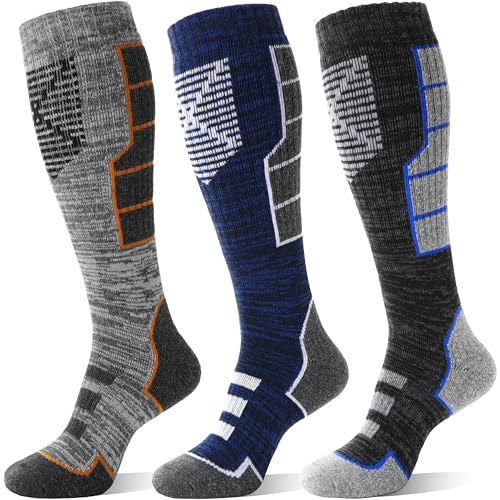
Anlisim Merino Wool Ski Socks, three pairs
- Fabric:
- Merino blend
- Height:
- Over the calf
- Count:
- Three pairs
Three pairs for the price of one name-brand pair. The rule that matters more than the brand: ONE thin sock, never two and never a thick one. Volume in a ski boot cuts circulation and cold feet come from a tight boot, not a thin sock.
Best for: Anyone still wearing two pairs of cotton socks in ski boots.
What it costs you: Less durable and less precisely cushioned than a purpose-built ski sock.

Hylaea Merino Wool Ski Socks
- Fabric:
- Merino blend
- Cushion:
- Targeted shin and shin
- Height:
- Knee high
Targeted cushioning over the shin and none across the instep, which is what a ski sock is for. A hiking sock in a ski boot bunches exactly where the boot needs to grip.
Best for: Full days in a properly fitted boot.
What it costs you: Nothing fixes a badly fitted boot. Buy the bootfit first.

Carhartt Mens Waterproof Insulated Knit Cuff Glove
- Insulation:
- Synthetic
- Waterproof:
- Insert
- Cuff:
- Knit
A genuinely waterproof insert at a work-glove price. Most cheap ski gloves are water resistant, which means wet hands by lunchtime on a warm day.
Best for: Cold-to-moderate resort days, and anyone hard on gloves.
What it costs you: A knit cuff lets snow in on a deep day. Not a powder glove.

Minus33 Merino Wool Glove Liners
- Fabric:
- Merino wool
- Use:
- Under gloves or alone
- Weight:
- Liner weight
Twenty dollars that lets you take the outer glove off to work a buckle, a binding or a beacon without putting a bare hand on cold metal. On a transition in a wind that matters more than the outer glove does.
Best for: Touring transitions, and anyone whose hands go numb the moment a glove comes off.
What it costs you: Not warm on their own below freezing, and they soak through fast when handling snow.
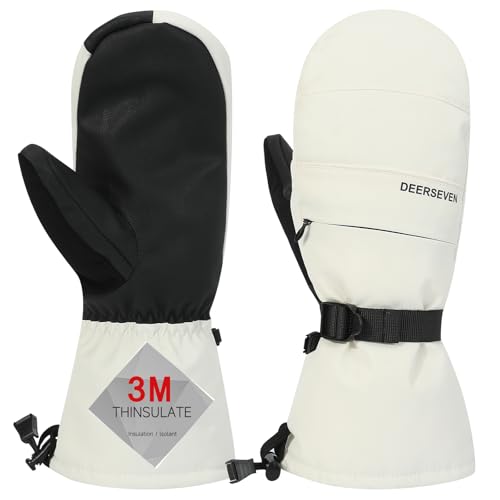
OMECHY Insulated Waterproof Ski Mittens
- Type:
- Mitten
- Insulation:
- Synthetic, heavy
- Cuff:
- Long gauntlet
Mittens are warmer than gloves and it is not close: fingers share heat instead of each radiating alone. If your hands go numb every cold day, this is the fix, and it costs less than heated gloves.
Best for: Deep cold, and anyone with poor circulation in the hands.
What it costs you: You lose dexterity, which matters for buckles, zips and anything to do with a rescue.
Specifications are the manufacturer's published figures, not measurements we took. Sizes, prices and stock change constantly, so confirm on the retailer page before buying. We earn commissions from Backcountry and from qualifying Amazon purchases, and every link on this page is one or the other. Where a Backcountry button reads "shop the category" it opens a search for that category rather than that exact model, so it finds comparable gear alongside it.
Weight matters more than fibre
This is worth stating plainly because it is where people spend their attention wrongly. A 250 weight merino layer worn on a climb will soak you faster and more thoroughly than a 150 weight synthetic one, and no fibre advantage rescues that. Getting the weight right for the activity matters more than choosing between wool and polyester.
The general rule: 150 to 190 for touring and for the bottoms in almost every case, 190 for all-round use, 250 for cold resort days where you sit still. The base layer roundup covers the bands in detail, and the layering chart puts weights against temperatures in one table.
Caring for either
- No fabric softener, ever. It coats the fibre and destroys moisture transport in both materials.
- No hot tumble drying for merino. Heat felts wool, which shrinks it permanently and makes it scratchy.
- Wash merino less. Air it between days. Every wash you skip is service life you keep.
- Use a technical detergent on synthetic occasionally. It strips the oils that cause persistent odour.
- Wash separately from anything with velcro. A single velcro tab shreds a fine knit.
The same principles run through the rest of the kit. The insulation comparison resolves the midlayer question on the same wet-activity logic, and the gear care guide covers the twenty minutes after you get home that decides how long everything lasts.
Frequently asked questions
Which is better for skiing, merino or synthetic?
Merino, for most skiers, and the reason is narrow rather than general. Wool fibres hold moisture inside the fibre structure rather than in the air spaces between fibres, so a damp merino layer still traps air and still insulates. A damp synthetic layer moves the moisture out faster but insulates less while it is wet. Skiing involves working hard and then sitting still on a chairlift or standing at a transition, and it is during those still periods that a wet layer decides whether you are comfortable. Merino also resists odour for days, which matters on any multi-day trip.
When is synthetic actually the better choice?
Three cases. High-output touring where you sweat continuously and drying speed matters more than damp warmth, because a synthetic layer will be dry again before a merino one. Durability, where a pack belt, a harness or a bib waistband abrades the fabric, since thin merino pills and eventually holes far sooner than nylon or polyester. And budget, because synthetic is significantly cheaper for equivalent performance. Many experienced tourers deliberately run synthetic on high-output days and merino on cold static ones, which is the honest version of the answer.
Are merino blends a compromise or an improvement?
An improvement for most purposes. A merino-dominant blend with a small proportion of nylon in the core of the yarn keeps almost all of the wool behaviour, particularly the damp warmth and the odour resistance, while roughly doubling the abrasion life. That is why ski socks are almost universally blends rather than pure wool, and why an increasing share of base layers are too. Pure merino has a slightly better hand feel and slightly better moisture behaviour, and it wears out faster. If a garment will live under a pack belt, buy the blend.
Why is cotton so wrong for a base layer?
Cotton fibre absorbs many times its weight in water and holds it in the spaces between fibres, which is exactly where the trapped air that insulates you should be. A wet cotton layer conducts heat away from your skin roughly twenty-five times faster than dry air does, takes hours to dry against your body, and stays clammy the whole time. In a resort context that is misery from the second run. In the backcountry, where you sweat on a climb and then stand still in wind at a transition, it is a genuine hypothermia risk. There is no temperature at which it is the right choice.
Does merino really not smell?
It resists odour far better than synthetic, and the mechanism is real rather than marketing. Body odour is produced by bacteria metabolising compounds in sweat, and the structure and chemistry of wool fibre are hostile to those bacteria in a way that smooth synthetic fibres are not. Synthetics also hold oils that feed the bacteria, which is why a polyester shirt can smell after a single hard day and get worse with every wash. The practical consequence is that merino needs washing far less often, which extends its life and makes multi-day trips with one or two layers realistic.
How should I wash each of them?
Merino: cool or warm gentle wash, mild detergent, absolutely no fabric softener, dried flat or on a very low tumble. Heat felts wool, which shrinks it permanently and makes it scratchy, and softener coats the fibre and destroys the moisture transport you paid for. Synthetic: normal wash, no softener either, and a technical detergent occasionally to strip the oils that cause persistent odour. Neither should be washed with anything that has velcro on it. The single most common way people ruin a base layer is a hot tumble dryer, and the second is fabric softener.
How we choose: we compare published manufacturer specifications, published certification standards and verified owner reviews across retailers. We do not test equipment in person, and every figure quoted here is the manufacturer's published number unless we say otherwise. This is researched buying guidance and not professional instruction: binding release values are set by a certified technician on a calibrated jig, and avalanche terrain requires formal training and a current regional forecast that no article can replace.