The best base layers for skiing
The best ski base layer for most people is a 190 gram per square metre merino top at under $50, with a lighter 165 weight bottom. Merino keeps insulating when damp, which matters in a sport where the moisture is mostly your own sweat. Go to a 250 weight only for cold resort days on a chairlift, and never wear cotton at any weight.
The best base layer for skiing is a 190 weight merino top at under $50, paired with a lighter 165 weight bottom at under $50. That asymmetry is deliberate and it is the thing most people get wrong. If you ski cold resort days and spend them on a chairlift rather than climbing, the 250 weight set at under $100 is warmer and cheaper bought together. There is no budget tier here worth naming, because the cheap option is cotton and cotton is the one genuinely wrong answer in snow sports.
A base layer has exactly one job: move moisture off your skin and keep insulating after it has. Everything else, including how warm the fabric feels in a shop, is secondary to that. Get this layer right and the rest of the system works. Get it wrong and no shell or midlayer will rescue the day.
Fabric weight, and what each band is for
Base layers are specified in grams per square metre, which is a measure of fabric density rather than warmth directly, but the two track closely enough to shop by. The bands people actually encounter:
| Weight | What it is for | Where it fails |
|---|---|---|
| 150 g/m2 and under | High-output touring, spring skiing, and bottoms in almost every case | Not warm enough alone on a cold chairlift, and thin merino wears through fast |
| 165 to 190 g/m2 | The all-round answer. Warm enough to sit still in, light enough to climb in | Nothing much. This is where most people should be |
| 250 g/m2 | Cold resort days, deep winter, anyone who runs cold and rides lifts | Far too warm to skin in. A tourer in a 250 is soaked by the first switchback |
| Expedition weight, 320 and up | Static cold, and not really skiing | Traps sweat under any exertion at all. Rarely the right ski answer |
The practical rule: pick the weight for the coldest thing you do while standing still, not for the coldest air temperature. Skiing generates a lot of heat, and the moments you are cold are the lift ride, the transition and the car park.
<!-- gift-guides-xlink -->The picks, at three weights
The ladder is green circle, blue square, black diamond, the same three tiers used across this site. Green is the everyday 190 weight top and its lighter bottom. Blue is the warmer 250 weight set for cold resort days, in both a mens and a womens cut. Black is the midweight with the fit that stays put under a pack belt, which is what touring asks for.
Base layer picks
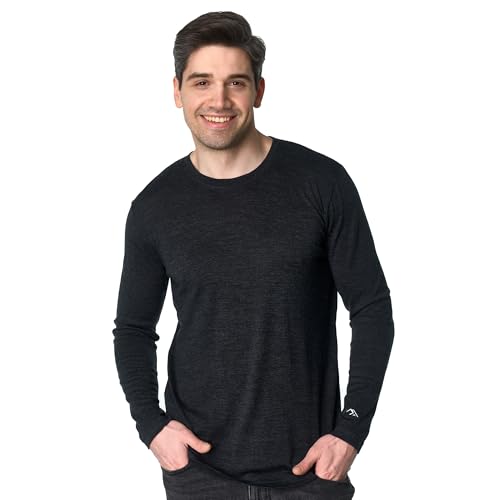
Merino.tech 100 Percent Merino Wool Mens Base Layer Top, 190 weight
- Fabric:
- 100 percent merino
- Weight:
- 190 g/m2
- Use:
- Next to skin
Merino keeps insulating when it is damp and does not develop a smell over a multi-day trip, which are the two reasons it dominates this layer. A 190 weight is the right all-round choice for skiing.
Best for: Everyone, resort and touring, as the layer against the skin.
What it costs you: Wears out faster than synthetic and costs more. Cotton is the only genuinely wrong answer here.

Merino.tech Merino Wool Mens Base Layer Pants, 165 weight
- Fabric:
- 100 percent merino
- Weight:
- 165 g/m2
- Use:
- Under shell pants
Lighter than the top on purpose. Legs generate heat and sit inside insulated pants or a bib, so a heavy bottom layer is the fastest way to overheat while skinning.
Best for: Under any shell pant or bib.
What it costs you: Thin merino pills where a harness or pack belt rubs.

Merino.tech Merino Wool Mens Base Layer Set, 250 weight
- Weight:
- 250 g/m2
- Includes:
- Top and bottom
- Use:
- Deep cold
A 250 weight is a genuinely warm base layer, and buying it as a set is cheaper than separately. This is the resort answer for single-digit days on a chairlift.
Best for: Cold resort days where you are not generating much heat.
What it costs you: Too warm to climb in. A tourer in a 250 weight will be soaked by the first switchback.

Merino.tech Merino Wool Womens Base Layer Set, 250 weight
- Weight:
- 250 g/m2
- Includes:
- Top and bottom
- Use:
- Deep cold
The same midweight merino cut for a womens fit, as a set. Fit against the skin is what makes a base layer work: a loose base layer holds a pocket of damp air instead of wicking.
Best for: Cold resort days.
What it costs you: Too warm for high-output touring, same as its counterpart.

MERIWOOL Mens Midweight Merino Long Sleeve Base Layer
- Fabric:
- 100 percent merino
- Weight:
- Midweight
- Fit:
- Athletic
Midweight merino with a cut that stays put under a pack belt. For touring, a base layer that does not ride up is worth more than a few grams of insulation.
Best for: Touring, and cold-weather resort days for someone who runs cold.
What it costs you: Costs more than the value options for a difference measured in fit and durability, not warmth.
Specifications are the manufacturer's published figures, not measurements we took. Sizes, prices and stock change constantly, so confirm on the retailer page before buying. We earn commissions from Backcountry and from qualifying Amazon purchases, and every link on this page is one or the other. Where a Backcountry button reads "shop the category" it opens a search for that category rather than that exact model, so it finds comparable gear alongside it.
How we chose
We compared published fabric compositions, stated fabric weights in grams per square metre, cut and length, and seam placement across the range, then read verified owner reviews across retailers for the two things a specification never shows: whether a garment shrinks in a normal household wash, and whether the hem stays down under a pack belt. We did not test these in person and we do not claim to have. The weights quoted are each manufacturer's published figures.
Why the bottoms should be lighter than the top
Your legs are the largest muscle group in your body and they are working continuously, both on a descent and on a climb. They also sit inside a layer of insulated pants or a bib that your torso does not have an equivalent of. Put a heavy base layer on them and the result is sweat with nowhere to go, which then chills you on the lift and defeats the entire point of the system.
A 150 to 165 weight bottom under a shell pant or bib is right for nearly everybody, including people who buy a 250 weight top. If your legs are genuinely cold in that, the problem is usually that your pants are uninsulated shells rather than that your base layer is too thin, and the fix is a different pant rather than a heavier long john.
Merino against synthetic, settled honestly
Merino wins on two axes that matter in skiing and loses on three that matter less. It keeps insulating when damp because the water is held inside the fibre rather than in the air spaces between fibres, and it resists odour for days because the fibre structure is hostile to the bacteria that produce it. Those two facts are why almost every experienced skier ends up in wool next to the skin.
Synthetic dries faster, which is genuinely useful on a multi-day trip with no drying room. It costs less. And it is far more abrasion resistant, so it survives a pack belt and a harness where thin merino pills and eventually holes. The high-output touring crowd is where you find people who have chosen synthetic on purpose rather than on price. The full comparison lays the trade out line by line.
Blends split the difference and most of the market is one. A merino-dominant blend with a small percentage of nylon in the yarn keeps nearly all of the wool behaviour and roughly doubles the abrasion life, which is why it is the default construction in ski socks as well.
Fit: the part that decides whether it works
- Snug everywhere, tight nowhere. Moisture transfers where fabric touches skin. A loose base layer holds a pocket of damp air, which is the exact failure it exists to prevent.
- Long in the body. Long enough to stay tucked when you reach overhead. A hem that rides up leaves a cold band across your lower back under a pack belt.
- Flat seams, and check where they sit. A shoulder seam under a pack strap is a hot spot on a long climb. Raglan and offset shoulder seams exist for this reason.
- Cuffs that stay put. Sleeves that creep back up your forearm when you pull a jacket on will do it every single time you put the jacket on.
- A neck you can actually tolerate. A quarter zip vents without stripping and is the more useful choice for touring. A crew neck is warmer and simpler for resort days.
How many do you need?
Two tops and one bottom covers a normal season, and merino's odour resistance is what makes that number so low. Two tops lets one dry while the other is worn, which matters on a trip. A third is only worth it if you tour regularly and want a light one for high-output days alongside a warmer one for cold static days.
Do not buy a base layer as a gift-shop souvenir logo tee in a technical fabric. The cut is invariably too loose to work and you have paid a technical price for something that behaves like a cotton shirt.
Where the base layer sits in the system
Three layers, one job each. The base layer moves moisture. The midlayer holds warm air, and the right default for anything worn while moving is a grid fleece rather than down, which the midlayer roundup covers in full. The shell blocks wind and water and vents when you are working, which the jacket and shell roundup handles.
If you want it as one picture, the layering guide explains why people end up simultaneously sweating and cold, and the layering temperature calculator turns a forecast into an actual kit list split by resort and touring. The printable layering chart is the same information in one table.
For touring, where the base layer has to survive a pack belt and stay put through thousands of steps, the midweight with an athletic cut is the one worth the extra money. Fit and durability, not warmth, are what you are buying at that price.
Frequently asked questions
What weight base layer should I buy for skiing?
A 190 gram per square metre merino top is the right all-round answer for skiing, and a lighter 150 to 165 weight is correct for the bottoms. That split surprises people, but the legs sit inside insulated pants or a bib and generate heat continuously, so a heavy bottom layer is the fastest way to overheat. Go up to a 250 weight top only if you ski in genuinely cold conditions and spend the day on a chairlift rather than climbing. If you tour, stay at 150 to 190 for both, because you can always add a grid fleece and you cannot take a base layer off without stripping to the waist in a wind.
Is merino better than synthetic for a ski base layer?
For most skiers, yes, and for one specific reason: merino keeps insulating when it is damp, and skiing is a wet activity. Wool fibres hold moisture inside the fibre structure rather than in the spaces between fibres, so the layer still traps air after you have sweated into it. Merino also resists odour over multiple days, which matters on a hut trip more than any performance figure. Synthetic dries measurably faster, costs less and lasts longer under a pack belt, which is why some high-output tourers prefer it. The wrong answer is cotton, which holds water in the spaces between fibres and turns cold and stays cold.
Why is cotton such a bad base layer?
Cotton fibre is hollow and hydrophilic, so it absorbs many times its own weight in water and holds it in the gaps between fibres where warm air should be. A wet cotton layer conducts heat away from your skin roughly twenty-five times faster than dry air, it takes hours to dry against your body, and it stays clammy the entire time. In a resort context that means being cold and miserable from about the second run. In the backcountry, where you sweat on the climb and then stand still at a transition in wind, it is a genuine hypothermia risk. There is no temperature at which a cotton base layer is the right choice for snow sports.
How should a base layer fit?
Snug against the skin everywhere, with no loose pockets and no compression. A base layer works by moving moisture from your skin into the fabric, and that transfer only happens where the fabric is touching you. A loose base layer traps a pocket of damp air instead, which is exactly the failure it exists to prevent. It should also stay put: the hem should not ride up under a pack belt or a bib, and the cuffs should not creep back up your forearms when you put a jacket on over them. Long enough in the body to tuck is worth more than any fabric claim.
Can I wear the same base layer for resort skiing and touring?
You can, but the ideal weights differ enough that regular tourers end up with two. Resort skiing has long low-output periods on lifts, so a warmer 250 weight top is comfortable. Touring is continuous exercise interrupted by cold stops, so a 150 to 190 weight top plus a grid fleece you can vent is a better system: you climb in the base layer alone or nearly alone, then add insulation at the transition. If you own one, buy the 190. It is warm enough for most resort days and light enough that touring in it is not a mistake.
How do I wash merino without ruining it?
Cold or warm wash on a gentle cycle with a mild detergent and no fabric softener, then dry flat or on a very low tumble. Softener coats the fibre and destroys the moisture transport that you paid for. Heat is the other killer: hot water and a hot dryer felt the wool, which shrinks the garment permanently and turns a next-to-skin layer into something scratchy. Merino also needs washing far less often than synthetic does, because the fibre resists odour, so airing it between days is usually enough and every wash you skip extends its life.
How we choose: we compare published manufacturer specifications, published certification standards and verified owner reviews across retailers. We do not test equipment in person, and every figure quoted here is the manufacturer's published number unless we say otherwise. This is researched buying guidance and not professional instruction: binding release values are set by a certified technician on a calibrated jig, and avalanche terrain requires formal training and a current regional forecast that no article can replace.