The best ski jackets and shells, at three budgets
The best ski jacket for most people is the Helly Hansen Sogn Shell 2.0 at under $300, an uninsulated fully taped hardshell with pit zips that lets you change the warmth underneath instead of being stuck with one temperature. Buy a shell plus a separate midlayer rather than an insulated jacket: the shell covers roughly a forty degree range for similar money and outlives two or three midlayers.
The best ski jacket for most people is the Helly Hansen Sogn Shell 2.0 at under $500, because it is uninsulated, fully taped and vented, which means the warmth of your kit is decided by what you put underneath rather than fixed at the factory. If you want to spend less, the 33,000ft 3-in-1 at under $100 is two jackets in one and covers a first resort season. If you tour, the Mammut Treeline Light at under $500 is the light hardshell you can actually climb in without cooking.
Everything else on this page follows from one fact about snow sports: it is a wet activity, and most of the water is yours. Snow melts on the outside of a jacket at a rate a membrane handles comfortably. Sweat arrives on the inside at a rate no membrane handles at all once you are working. That is why the ranking below weights taped seams, pit zips and fit far above the waterproof number printed on the swing tag.
What actually decides whether you stay dry
In descending order of how much you will notice it on a real ski day:
| Feature | What it does | Worth paying for? |
|---|---|---|
| Fully taped seams | Seals every stitch line. A stitch hole is a hole regardless of the fabric around it | Yes, always. This is the line between a ski jacket and a winter coat |
| Pit zips | Dumps heat and vapour faster than any membrane can, on demand | Yes. The most useful feature on the jacket for anyone who works hard in it |
| Three-layer construction | Bonds membrane between face and backer, so pack straps and ski carries do not delaminate it | Yes if you tour or expect four seasons or more |
| Powder skirt and hem adjustment | Stops snow travelling up your back after a fall or on a lift | Yes for resort. A bib does the same job better |
| Helmet-compatible hood | Closes over a helmet rather than flapping behind it in wind | Yes. A hood that does not fit the helmet is decorative |
| Hydrostatic head above 20,000 mm | Passes a laboratory water-column test at a higher number | Rarely. Below taped seams and venting in every real scenario |
Note what a high waterproof rating cannot fix: untaped seams, a jacket with no way to vent, and a face fabric that has wetted out because it has not been washed in three seasons. Those three account for most of the times a skier says their expensive jacket leaked.
The picks, at three budgets
The ladder is green circle, blue square, black diamond, the same three tiers used everywhere on this site. Green is the lowest cost to a jacket that keeps snow out. Blue is the buy-once shell that turns your outerwear into a system. Black is the touring answer, where weight and breathability start to outrank everything else. Pants and bibs sit in the same list, because they are the same decision made twice.
Jacket, shell, pant and bib picks

33,000ft Mens Hooded Waterproof 3-in-1 Ski Jacket
- Construction:
- 3-in-1, zip-out liner
- Waterproof:
- Coated
- Use:
- Resort
A zip-out liner is two jackets for the price of one and covers a cold day and a spring day without a second purchase. For a first season at a resort that is the right trade.
Best for: A first ski jacket for resort days.
What it costs you: A coated fabric wets out in sustained wet snow, and the breathability is not enough for climbing in.

Columbia Womens Tipton Peak IV Insulated Jacket
- Insulation:
- Synthetic
- Waterproof:
- Coated with taped seams
- Use:
- Resort
A known brand at a budget price with taped seams, which is the detail that separates a jacket that keeps snow out from one that leaks at every stitch line after an hour of sitting on a chairlift in wet snow.
Best for: Resort skiing in cold, drier climates.
What it costs you: Fixed insulation. On a warm spring day there is no way to take the warmth out.

Helly Hansen Sogn Shell 2.0 Jacket
- Construction:
- Uninsulated shell
- Waterproof:
- Fully taped
- Vents:
- Pit zips
An uninsulated shell plus a separate midlayer beats an insulated jacket at every temperature except one, because you can remove the insulation. This is the switch that turns a resort wardrobe into a system.
Best for: Anyone skiing a range of temperatures, and anyone who has ever been too hot in an insulated coat.
What it costs you: Needs a midlayer bought separately, so the total cost is higher than it looks.
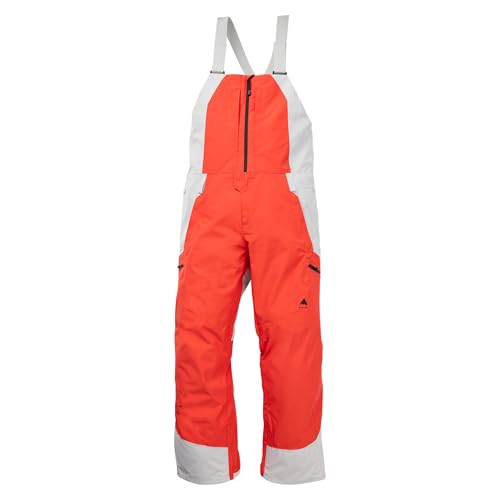
Burton Mens Reserve GORE-TEX 2L Bib Pants
- Fabric:
- GORE-TEX 2L
- Cut:
- Bib
- Seams:
- Fully taped
A bib removes the gap at the waist, which is where snow gets in after a fall in deep snow. Once you have ridden a chairlift with a handful of snow melting against your back you stop considering bibs optional.
Best for: Deep snow, and anyone who falls in it.
What it costs you: Warmer than pants and slower to get out of. That second point matters more than people expect.

Arctix Mens Essential Insulated Bib Overalls
- Insulation:
- Synthetic
- Waterproof:
- Coated
- Cut:
- Bib
Under fifty dollars for an insulated bib. Nothing here is technical, and for a beginner spending on a helmet and lessons instead, that is the right call.
Best for: A first season, sledding, and cold dry days.
What it costs you: Wets out in wet snow, does not breathe, and the insulation cannot be removed.

Mammut Treeline Light Hardshell Hooded Jacket
- Construction:
- Light hardshell
- Waterproof:
- Windproof and breathable
- Use:
- Touring
A light hardshell is what a tourer actually wears: waterproof when the weather turns, packable when it does not, and breathable enough to keep on through a climb. A resort jacket is too warm to skin in.
Best for: Backcountry touring and ski mountaineering.
What it costs you: Thin fabrics are less abrasion resistant. Ski carries and tree skiing wear them.

Roxy Womens Lunalite GORE-TEX 3L Ski Jacket
- Fabric:
- GORE-TEX 3L
- Rating:
- 30K waterproof
- Cut:
- Womens
Three-layer GORE-TEX in a womens cut, uninsulated so it layers properly. Three-layer construction bonds face fabric, membrane and backer into one, which is why it survives ski carries and pack straps where a two-layer garment delaminates.
Best for: Womens resort and touring, layered over a midlayer.
What it costs you: Sizes and colourways run out fast at this price. No insulation, so it needs a midlayer.

Outdoor Research Mens Trailbreaker Tour Pants
- Fabric:
- Softshell, stretch
- Vents:
- Full-length side zips
- Use:
- Ski touring
Softshell rather than hardshell, which is the correct choice for climbing: breathability matters more than waterproofing when the moisture is coming from you. Full-length side zips dump heat without stopping to change.
Best for: Ski touring, and any day where you are generating heat continuously.
What it costs you: Not fully waterproof. In heavy wet snow you want a hardshell pant instead.
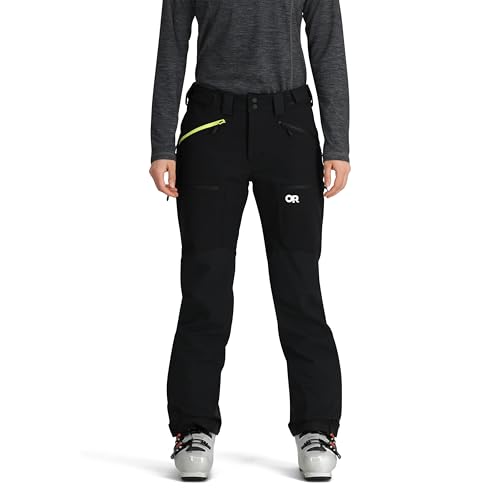
Outdoor Research Womens Trailbreaker Tour Pants
- Fabric:
- Softshell, stretch
- Vents:
- Full-length side zips
- Use:
- Ski touring
The same softshell touring pant cut for a womens fit. Fit through the hip and thigh is what decides whether a pant binds on a high step onto a kick turn, which is the movement a touring pant lives or dies on.
Best for: Womens ski touring.
What it costs you: Softshell is water resistant, not waterproof. Wet storm days want a hardshell.

Dakine Mens Stoker GORE-TEX 3L Snow Bib
- Fabric:
- GORE-TEX 3L
- RECCO:
- Reflector built in
- Seams:
- Fully taped
Three-layer construction bonds the membrane between face fabric and backer, which is why it survives a season of ski carries and pack straps where a two-layer garment delaminates. The RECCO reflector is passive rescue assistance, not avalanche safety.
Best for: Touring and hard resort use in wet climates.
What it costs you: Expensive, and RECCO is not a beacon. Do not let its presence change any decision you make in avalanche terrain.
Specifications are the manufacturer's published figures, not measurements we took. Sizes, prices and stock change constantly, so confirm on the retailer page before buying. We earn commissions from Backcountry and from qualifying Amazon purchases, and every link on this page is one or the other. Where a Backcountry button reads "shop the category" it opens a search for that category rather than that exact model, so it finds comparable gear alongside it.
How we chose
We compared published fabric constructions, published seam-taping coverage, venting layouts, hood and cuff designs, and stated waterproof and breathability figures across the range, then read verified owner reviews across retailers for the two things no specification captures: whether a jacket wets out under a pack in sustained wet snow, and whether the hood actually closes over a helmet. We did not test these jackets in person and we do not claim to have. The figures quoted here are each manufacturer's own published numbers.
Two layer against three layer, in plain terms
A two-layer jacket is a face fabric with a membrane bonded to the back of it, then a separate lining hung inside on its own seams so the membrane does not sit against your skin. It is cheaper to make, softer in the hand and slightly warmer because the loose lining traps a little air. Its failure mode is delamination: the free-hanging lining lets the membrane flex against the face fabric, and after a few hundred days of pack straps and ski carries the bond blisters.
A three-layer jacket bonds a backer directly onto the membrane, so the sandwich moves as one sheet. It is thinner, packs smaller, and shrugs off the abrasion that eventually finishes a two-layer garment. It is also less forgiving of a poor fit, because there is no lining sliding over your midlayer to hide it. The Roxy Lunalite 3L and the Dakine Stoker bib are the three-layer options here.
Bibs against pants
A bib removes the waist gap, which is where snow gets in during a fall in deep snow and where a handful of it then melts against your lower back for the rest of the chairlift ride. Once that has happened to you the argument is usually over. Bibs are also warmer, which is a benefit in deep cold and a liability in spring, and they are slower to get out of, which sounds trivial until you have queued for a lodge bathroom in ski boots.
For touring specifically the calculus changes again. A softshell touring pant like the Trailbreaker Tour trades outright waterproofing for breathability and stretch, which is the right trade when the water is coming from you rather than from the sky. Full-length side zips let you dump heat without stopping, which is worth more on a skin track than any membrane. On a genuinely wet storm day a hardshell pant is still the answer.
Fitting a jacket over a layering system
- Try it on over what you will actually wear. A base layer and a grid fleece at minimum. A jacket fitted over a t-shirt in a warm shop is a jacket that binds across the back on the first cold day.
- Raise both arms straight overhead. The hem should stay at or below your waist. If it lifts, the jacket is short in the body and snow will find the gap.
- Put the hood up over a helmet. Not a hat. The hood should close around the helmet and turn with your head rather than staying put while you look sideways.
- Check the cuffs over a glove and under a glove. Both work, but the jacket has to allow one of them cleanly. A cuff that only just clears a bare wrist will not go over a gauntlet.
- Reach forward in a ski stance. Sleeves should still cover the wrist. This is the position your arms are actually in, and it is not the position you check a coat in.
What goes underneath
A shell is one third of a system and it is the third that does the least for warmth. The layer against your skin manages moisture, the midlayer holds warm air, and the shell blocks wind and water. Getting the first two right is what makes the shell work, and it is where most people are wearing the wrong thing. The base layer roundup covers fabric weights and the one genuinely wrong choice, and the midlayer roundup explains why grid fleece and not down is the default for anything worn while moving.
If you want the whole thing in one table rather than three pages, the layering guide lays out the system and the layering temperature calculator turns a forecast into what to actually put on, split by whether you are riding a lift or climbing.
Buying tips
- Buy the shell, not the insulation. Insulated jackets are the easiest garment in the sport to outgrow, because your fitness, your terrain and your climate all change what warmth you need and an insulated jacket cannot follow any of them.
- Pre-season and late spring are the two honest sale windows. Pre-season has the complete size run at full price, late spring has the discounts and whatever sizes are left. Buying a shell in spring for the following season is the cheapest way to own a good one.
- Check the pocket layout against a pack. A hand pocket sitting under a hip belt is unusable, which is why touring jackets put their pockets high on the chest.
- A RECCO reflector is not avalanche equipment. Several jackets and bibs here include one. It is a passive reflector that helps an organised rescue service with a RECCO detector locate a body, and it does nothing inside the window in which a companion rescue decides the outcome. Avalanche gear only works alongside formal training, and it never substitutes for an avalanche course or for checking the regional forecast before every tour.
- Wash it, then reproof it. A jacket that has wetted out feels exactly like a jacket that has failed, and a wash plus a warm tumble usually fixes it for nothing.
Where a jacket sits in the whole setup
Outerwear is rarely the first purchase worth making. The buying order guide puts boots, a helmet and lessons ahead of it for a reason: a borrowed jacket ruins a day far less reliably than a rental boot does. Once you are past that, the buy-once resort setup prices a shell alongside everything else with a running total, and the touring setup shows where the light hardshell lands in a backcountry kit.
And if the budget is the constraint rather than the choice, the first resort setup uses the 3-in-1 jacket above and puts the money saved into a helmet and lessons, which is the correct order.
Frequently asked questions
What is the difference between a 2-layer and a 3-layer ski jacket?
A two-layer jacket bonds the waterproof membrane to the outer face fabric and then hangs a separate mesh or taffeta lining inside it. A three-layer jacket sandwiches the membrane between the face fabric and a bonded backer, so all three move as one piece of material. Three-layer fabric is thinner, quieter after a season of use, and far more resistant to the delamination that eventually blisters a two-layer jacket where a pack strap or a ski carry rubs it. Two-layer is cheaper and slightly softer against the hand. If you tour, carry a pack, or expect the jacket to last more than about four seasons, three-layer is the one worth the money.
Do I need a waterproof rating above 20,000 mm?
Almost certainly not, and the number is far less useful than the marketing implies. A hydrostatic head figure is measured by standing a column of water on a sample of fabric until it leaks, which bears little relationship to a wet chairlift seat, a pack strap compressing a shoulder, or a full day of snow melting on a sleeve. Once a jacket is fully taped and in the 15,000 to 20,000 mm band, the things that decide whether you stay dry are the seam tape, the storm flap behind the main zip, the cuff closures and the powder skirt. A cheap 30,000 mm jacket with untaped seams leaks at every stitch line and the rating does nothing about it.
Are pit zips actually necessary?
They are the single most effective ventilation feature on a ski jacket and they matter more than any membrane rating, because the moisture that soaks most skiers comes from the inside. Every waterproof membrane moves vapour at a rate that assumes a modest temperature and humidity gradient across the fabric. When you are skinning uphill or hiking a bootpack you exceed that rate within a few minutes, and the only thing that keeps up is a hole. Pit zips are that hole, they are controllable, and they let you keep the jacket on through a climb instead of stopping to strip a layer.
Should I buy an insulated jacket or a shell?
A shell with a separate midlayer, for almost everyone. An insulated jacket is optimised for one temperature band and has no adjustment beyond a zip. A shell plus a grid fleece plus a synthetic puffy covers roughly a forty degree range for a similar total outlay, and the shell outlives two or three midlayers because insulation is what wears out first. The honest exception is the person who skis three or four days a year in one predictable climate and does not want to think about a system. For them an insulated jacket is simpler and that simplicity has real value.
How should a ski jacket fit?
Loose enough to fit a base layer, a grid fleece and a light puffy underneath with the arms still moving freely overhead, and no looser. Raise both arms straight up: the hem should not rise above your waist, because a hem that lifts lets snow up your back on a chairlift and in a fall. Check that the hood fits over a helmet with the helmet on, not over a hat, because a hood sized for a hat will not close over a helmet and will flap in a wind. Sleeves should reach past the wrist bone with the arms forward in a ski stance rather than hanging at your sides.
Can I wash a waterproof ski jacket?
You should, and the failure to do it is why most jackets stop working. Body oils, sunscreen and dirt clog the face fabric and kill the durable water repellent finish, and once the face fabric wets out the membrane stops moving vapour even though it is still perfectly waterproof. That is the clammy feeling people blame on breathability. Wash it in a technical cleanser rather than detergent, skip the fabric softener entirely, and then tumble dry on low or press it with a warm iron under a cloth to reactivate the repellent finish. Reproof with a wash-in or spray-on treatment when tumbling no longer restores it.
How we choose: we compare published manufacturer specifications, published certification standards and verified owner reviews across retailers. We do not test equipment in person, and every figure quoted here is the manufacturer's published number unless we say otherwise. This is researched buying guidance and not professional instruction: binding release values are set by a certified technician on a calibrated jig, and avalanche terrain requires formal training and a current regional forecast that no article can replace.