Best Snowboards 2026, Compared at Three Budgets
The best snowboard for most riders is a medium-flex twin such as the Burton Process at under $500, which handles park laps, groomers and storm days without being bad at any of them. For a first setup, the System MTN package at under $500 includes bindings, and a US 11 boot or larger needs a wide board such as the Burton Instigator 155W. Size by rider weight first, then check waist width against your boot.
The best snowboard for most riders is a medium-flex twin, and the Burton Process at under $500 has been the reference for that description for years: it handles a park lap, a groomer and a storm day without being bad at any of them. For a first setup, the System MTN package at under $500 arrives with bindings and removes a compatibility question. If you wear a US 11 boot or larger, the Burton Instigator 155 wide at under $500 is the one that stops you dragging a toe edge.
Snowboards compared at a glance
Every board on this page side by side. Length, flex and profile are the manufacturers' published figures; prices are Amazon listing prices checked in 2026 and change often, so check the live price before buying. Size first: the snowboard size chart turns your weight into a length and your boot size into a waist width.
| Pick | Tier | Budget | Length | Flex | Best for |
|---|---|---|---|---|---|
| System MTN Snowboard Package with Bindings, 159 cm | Beginner | Under $500 | 159 cm | Camber | A first board for a rider around 180 to 195 lb. |
| Nitro Lectra Womens All-Mountain Snowboard, 149 cm | Beginner | Under $250 | 149 cm | Cam-Out hybrid | A learning to intermediate rider around 120 to 145 lb. |
| Burton Process Mens Snowboard, 152 cm | Intermediate | Under $500 | 152 cm | Medium | An intermediate rider around 130 to 155 lb who rides the whole mountain. |
| Burton Instigator PurePop Camber Snowboard, 155W cm | Expert | Under $500 | 155 wide | PurePop | A rider with a US 11 boot or larger. |
Snowboard shopping goes wrong in a predictable order. People choose by graphic, then by height, then discover waist width after a season of catching edges in carves. The correct order is weight, then waist width, then camber profile, then everything else.
<!-- gift-guides-xlink -->Length comes from weight, not height
A snowboard is a spring. How much it bends under you, and therefore how it turns and how it holds an edge, is a function of the mass loading it. Height affects your leverage over the board and your stance width, which matters, but it is a second-order effect compared with weight.
Every manufacturer publishes a recommended rider weight range for each length of each model, and that range is what to shop by. It is also model specific: a stiff freeride board and a soft park board of the same length carry different weight ranges, because the flex differs. Once you are inside the correct range, go a few centimetres shorter for quicker turns and park riding, or a few longer for stability at speed and float in deep snow.
The snowboard size calculator works through weight and waist width together, and the printable size chart is the same information as a grid.
Waist width is the specification riders skip
Waist width is the measurement of the board at its narrowest point, and it has to be matched to the length of your boot outsole, which is not the same number as your shoe size. If the board is too narrow, your toes and heels hang over far enough that they contact the snow before the edge does in a hard carve, which stops the turn dead and puts you on the ground.
| Boot size, US mens | Typical waist width needed | Note |
|---|---|---|
| 7 and under | Narrow, roughly 235 to 245 mm | A standard waist feels sluggish and hard to tip on edge |
| 8 to 10 | Standard, roughly 248 to 255 mm | The mainstream. Most boards are built here |
| 10.5 to 11.5 | Mid-wide, roughly 255 to 260 mm | Or a reduced-footprint boot, which buys about a size |
| 12 and up | Wide, 260 mm and above | Not optional. Toe drag on a wide board is still possible below this |
A reduced-footprint boot shortens the outsole for the same internal volume and can genuinely remove the need for a wide board for someone on the boundary, which the boot roundup covers.
The picks, at three budgets
The ladder is green circle, blue square, black diamond, the same three tiers used across this site. Green is a first setup, including a womens all-mountain board. Blue is the one-board answer for a rider who does everything. Black is the wide board for a big boot.
Snowboard picks

System MTN Snowboard Package with Bindings, 159 cm
- Length:
- 159 cm
- Includes:
- Board and bindings
- Camber:
- Camber
Board and bindings together, mounted and ready. For a first setup the package removes a compatibility question that trips people up, and it costs less than a bare board of similar quality.
Best for: A first board for a rider around 180 to 195 lb.
What it costs you: A 159 is a specific size, not a universal one. Check it against your weight, not your height.

Nitro Lectra Womens All-Mountain Snowboard, 149 cm
- Length:
- 149 cm
- Camber:
- Cam-Out hybrid
- Flex:
- Soft to medium
A hybrid camber profile is genuinely more forgiving for a learning rider: the rocker between the feet reduces edge catch and the camber underfoot keeps some grip on hard snow.
Best for: A learning to intermediate rider around 120 to 145 lb.
What it costs you: Soft flex washes out at speed on firm snow.

Burton Process Mens Snowboard, 152 cm
- Length:
- 152 cm
- Shape:
- Twin
- Flex:
- Medium
A medium-flex twin is the board that does the most things acceptably: park, groomers, and enough float to enjoy a storm day. The Process has been the reference in that description for years.
Best for: An intermediate rider around 130 to 155 lb who rides the whole mountain.
What it costs you: A twin is not a powder board and will not float like a directional shape.

Burton Instigator PurePop Camber Snowboard, 155W cm
- Length:
- 155 wide
- Camber:
- PurePop
- Waist:
- Wide
A wide board for a big boot, which is the specification riders with size 11 and up feet skip and then cannot work out why they catch a toe edge in every hard carve.
Best for: A rider with a US 11 boot or larger.
What it costs you: Slower edge to edge than a standard waist. Do not buy wide unless your boot needs it.
Specifications are the manufacturer's published figures, not measurements we took. Sizes, prices and stock change constantly, so confirm on the retailer page before buying. We earn commissions from Backcountry and from qualifying Amazon purchases, and every link on this page is one or the other. Where a Backcountry button reads "shop the category" it opens a search for that category rather than that exact model, so it finds comparable gear alongside it.
How we chose
We compared published lengths and recommended rider weight ranges, waist widths, camber profiles, flex ratings and core constructions across the range, then read verified owner reviews across retailers for the things a specification sheet cannot express: whether a board washes out at speed and whether a stated flex matches how it rides. We did not test these boards in person and we do not claim to have. Every figure quoted is the manufacturer's published number, and the listed lengths are specific sizes rather than universal recommendations.
Camber profiles, explained once
- Camber. The board arches upward in the middle when unweighted, so pressing it flat loads the edge along its whole length. Best grip on hard snow, most pop, least forgiving.
- Rocker. The opposite curve, tips lifted. Floats in deep snow, very hard to catch an edge, and vague and skittish on a firm groomer at speed.
- Hybrid, rocker between the feet. Rocker in the centre and camber underfoot. Reduces edge catch while keeping grip. This is the most forgiving genuinely capable profile and the right default for a learning rider.
- Hybrid, camber between the feet. Camber in the middle, rocker at the tips. Keeps most of the grip and pop while making the ends more forgiving. A common all-mountain and freeride choice.
- Flat. No curve at all. Predictable, cheap to manufacture, and common on entry-level boards. Neither exciting nor problematic.
Twin, directional twin, directional
A true twin is symmetrical in shape and flex, so it rides identically in both directions. That is what park riders want and it is what most all-mountain boards are, because riding switch is a normal part of the sport now.
A directional twin keeps the symmetrical shape but sets the stance back slightly and stiffens the tail, so it floats a little better and drives harder through a turn while still being rideable switch. A fully directional board has a longer nose, a set-back stance and often a tapered tail, which floats far better in deep snow and is awkward switch. Buy directional only if powder days are the reason you ride.
Bindings, and the safety note that matters
Snowboard bindings do not release. There is no release standard, no DIN equivalent and no calibrated jig involved, because with both feet fixed to one board the twisting injury mechanism that skis release to prevent does not apply the same way. What matters instead is matching binding flex to board flex, checking the disc pattern against your board mounting holes, and sizing the binding to your boot so it centres properly.
That is a genuine contrast with skiing, where a binding is a certified release device and its settings must be set and then tested by a certified technician on a calibrated jig, never adjusted at home. If you also ski, the binding mounting and DIN guide explains why those two worlds work so differently.
Bindings to pair with these boards

Nitro Talent Snowboard Bindings, medium
- Flex:
- Soft to medium
- Mount:
- Standard disc
- Size:
- Medium
A softer binding is more forgiving while you are still learning to steer with the whole board, and the standard disc fits every common mounting pattern. Match binding flex to board flex or one fights the other.
Best for: A first setup on a soft or medium board.
What it costs you: Soft bindings feel vague under an aggressive rider on a stiff board.
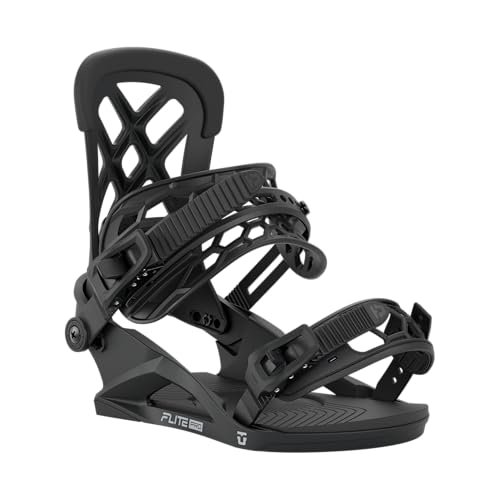
Union Flite Pro Mens Snowboard Bindings, large
- Flex:
- Medium
- Highback:
- Nylon composite
- Size:
- Large
Union builds bindings that survive being ridden hard, and the Flite Pro is the model that most park and all-mountain riders end up on. Medium flex matches the medium-flex boards most people own.
Best for: Most intermediate to advanced riders.
What it costs you: Check the size against your boot: a binding one size off never centres properly on the board.

Burton Step On Genesis Re:Flex Snowboard Bindings, large
- Entry:
- Step On
- Flex:
- Medium
- Boots:
- Step On boots only
Getting in standing up, in seconds, at the top of every run. If sitting down in the snow to strap in is the part of snowboarding you like least, this is the fix, and the connection is genuinely secure.
Best for: Riders who value fast entry and are buying boots at the same time.
What it costs you: Locks you into Step On boots, which is a real constraint on future purchases. Not compatible with any other boot you own.
Specifications are the manufacturer's published figures, not measurements we took. Sizes, prices and stock change constantly, so confirm on the retailer page before buying. We earn commissions from Backcountry and from qualifying Amazon purchases, and every link on this page is one or the other. Where a Backcountry button reads "shop the category" it opens a search for that category rather than that exact model, so it finds comparable gear alongside it.
Where the board sits in the setup
Boots first, exactly as with skiing. A snowboard boot that lets your heel lift ruins every turn you make on any board, and no board fixes it. The snowboard boot roundup covers dual-zone lacing, which is the most effective fix for heel lift, and it also decides your waist width via the outsole length.
After that, a helmet and a wrist guard. Wrist fractures are the most common snowboard injury by a wide margin, and a guard under a glove costs less than a lift ticket. The helmet roundup covers both. The first resort setup prices a full kit with a running total, and the renting against buying comparison shows where the crossover is if you are not sure yet.
Sources
- Lengths, flex, camber profiles and included bindings: the published specifications from Burton, Nitro and System for each board listed.
- Length by rider weight: the manufacturers' published weight ranges per board length, collected in the snowboard size chart.
- Waist width by boot size: the boot-outsole-to-waist relationship board makers publish for their wide models, applied in the snowboard size calculator.
If the plan is to ride outside the boundary
None of the boards above splits, so if backcountry riding is the goal the relevant page is the K2 Freeloader splitboard at under $1,000, sold as the board alone, so budget for a matching interface and skins. Splitboarding costs you in transition time and on a sidehill, and the avalanche training requirement is identical to a skier's rather than reduced. The skis against splitboard comparison is the decision before that one.
Frequently asked questions
How do these snowboards compare?
The System MTN package (under $500, 159 cm, bindings included) is the cheapest complete first setup. The Nitro Lectra (under $250, 149 cm, soft to medium flex) is the beginner pick for women. The Burton Process (under $500, medium-flex twin) is the all-round board for most riders, and the Burton Instigator 155W (under $500) is the wide board for a US 11 boot or larger. Compare them on length for your weight and waist width for your boot before price.
Are premium snowboards worth the money?
Past roughly $400, extra money mostly buys lighter cores, faster bases and more specialised shapes, which an advanced rider can feel and a beginner usually cannot. A beginner gets more from the right length and waist width at under $500 than from a premium board in the wrong size. Spend on boots that fit first, because boots decide comfort and control more than the board does.
How do I choose a snowboard length?
Weight first, height as a sanity check. A snowboard is a spring, and the amount it flexes under a rider is a function of mass rather than stature, which is why two riders of the same height and very different weight need different boards. Every manufacturer publishes a recommended rider weight range for each length of each model, and that range is the number to shop by. The old chin-to-nose height rule survives because it is easy to remember and it is right often enough to seem useful, but it fails badly at the ends of the weight distribution. Within a weight range, go shorter for park and quicker turns and longer for speed and float.
What waist width do I need?
Whatever your boot outsole needs, and this is the specification riders skip and then cannot explain why they catch a toe edge in every hard carve. Take the outsole length of your snowboard boot in centimetres, not your shoe size, and match it to the board waist width the manufacturer recommends. As a rough guide, a US mens 11 boot and above generally needs a wide board, and a US 8 and below is usually happier on a narrow or standard waist. Too narrow and your toes and heels overhang enough to drag in a carve. Too wide and the board is slow edge to edge and tiring to ride.
Camber, rocker or hybrid?
For a learning rider, a hybrid profile with rocker between the feet and camber underfoot is genuinely more forgiving, because the raised centre section reduces edge catch while the camber sections still hold on hard snow. Full camber gives the most pop and the best grip on ice and it is the least forgiving of a mistake. Full rocker floats beautifully in deep snow and feels vague and washy on a groomer. Most all-mountain boards sold today are some form of hybrid for exactly this reason, and the profile is the third thing to decide, after length and waist width.
Should I buy a board and bindings package?
For a first setup, it is a reasonable choice. A package removes a compatibility question that trips people up, the bindings arrive matched to the board flex, and it costs less than buying the two separately. What you give up is the ability to choose the binding, and bindings are where a lot of the feel of a setup comes from. The upgrade path is straightforward though: keep the board, buy better bindings later, and the old ones become a spare set. Buying a package to learn on and upgrading the bindings in the second season is a sensible route.
Do snowboard bindings release like ski bindings?
No, and this is the most important thing to understand about them. A snowboard binding is a fixed connection with no release mechanism and no release standard, because both feet are attached to one board and the twisting forces that break a skier leg do not act on a rider the same way. That means there is no DIN, no jig test and no certified release value on a snowboard setup. It also means that a binding is a mounting and adjustment job rather than a safety-critical calibration, which is the opposite of the situation on skis, where release values must be set and tested by a certified technician on a calibrated jig.
Is a more expensive snowboard actually better?
It is usually lighter, damper at speed and built with better core materials and a sintered rather than extruded base, which holds wax and runs faster. What it is not is easier to ride. A more expensive board is often stiffer and more demanding, which is exactly wrong for a rider still learning to steer with the whole board rather than the back foot. Buy to your current ability and terrain, and spend the difference on lessons, which buy more improvement per dollar than any board in the range.
How we choose: we compare published manufacturer specifications, published certification standards and verified owner reviews across retailers. We do not test equipment in person, and every figure quoted here is the manufacturer's published number unless we say otherwise. This is researched buying guidance and not professional instruction: binding release values are set by a certified technician on a calibrated jig, and avalanche terrain requires formal training and a current regional forecast that no article can replace.